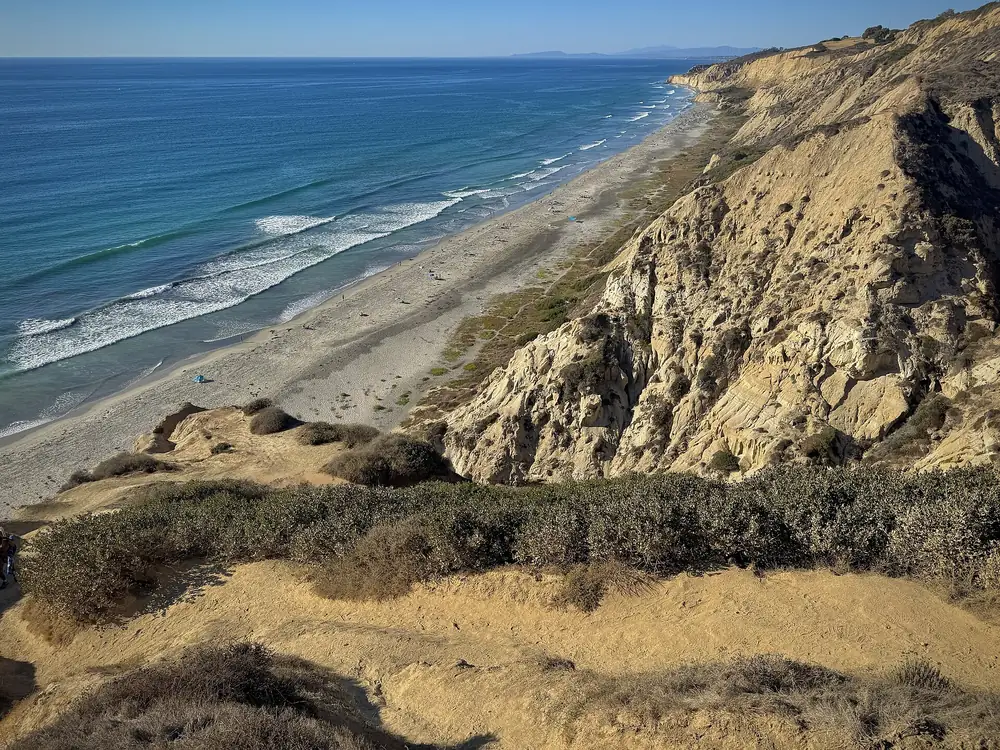
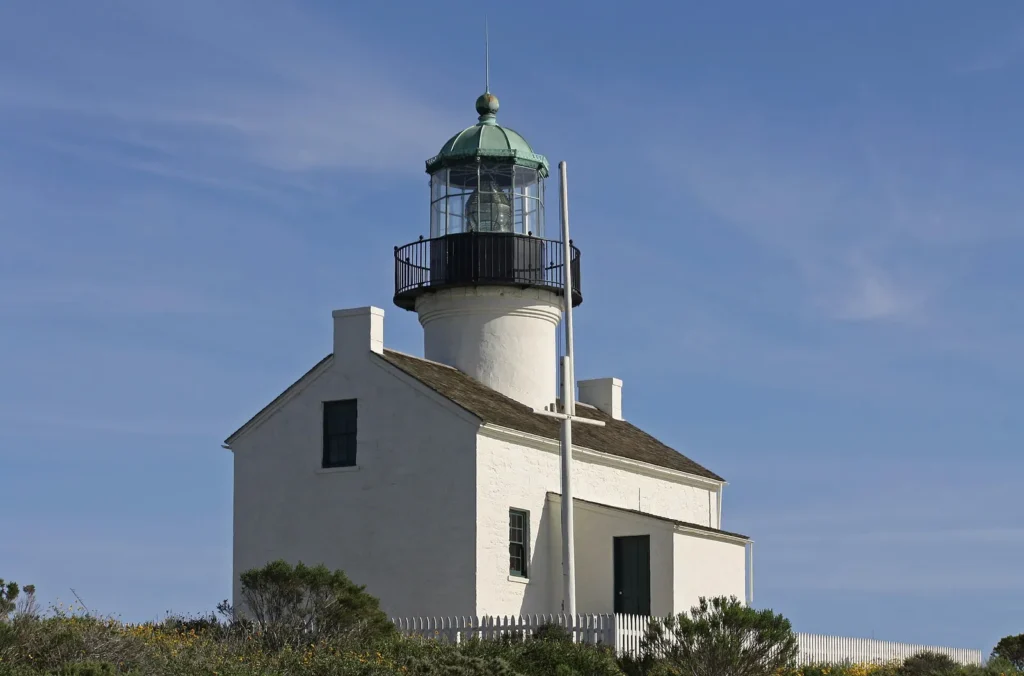
Cabrillo National Monument sits at the tip of the Point Loma peninsula and has some of the widest views in San Diego: the city skyline, San Diego Bay, Coronado, the Pacific Ocean and, on clear days, the mountains of Mexico. Managed by the National Park Service, it commemorates Juan Rodríguez Cabrillo’s 1542 landing at San Diego Bay, the first European expedition to set foot on what is now the U.S. West Coast. Today visitors come for the historic lighthouse, rocky tide pools, coastal trails, winter whale watching and military history. This guide covers hours, fees, tide pool timing and tips for making the most of your visit.
In this guide
- Cabrillo National Monument at a Glance
- Hours
- Entrance Fees
- Things to Do at Cabrillo National Monument
- Who Was Juan Rodríguez Cabrillo?
- Photography Tips
- Getting to Cabrillo National Monument
- Best Time to Visit
- Suggested Half-Day Plan
- What to Bring
- Accessibility
- Nearby Attractions
- Before You Go: Quick Checklist
- Frequently Asked Questions
Cabrillo is a highlight of our outdoor activities in San Diego hub. Nearby, don’t miss Sunset Cliffs, and for more tide pooling, see our La Jolla tide pools and Ocean Beach tide pools guides.
Cabrillo National Monument at a Glance
| Detail | Information |
|---|---|
| Address | 1800 Cabrillo Memorial Drive, San Diego, CA 92106 |
| Park hours | Generally 9 a.m. to 5 p.m. daily |
| Closures | Thanksgiving and Christmas Day |
| Entrance fee | Per vehicle, motorcycle or person; pass valid for 7 days |
| Best for | Views, history, tide pools, whale watching |
| Official site | nps.gov/cabr |
Hours and fees can change, so confirm on the official NPS hours page before you go.
Hours
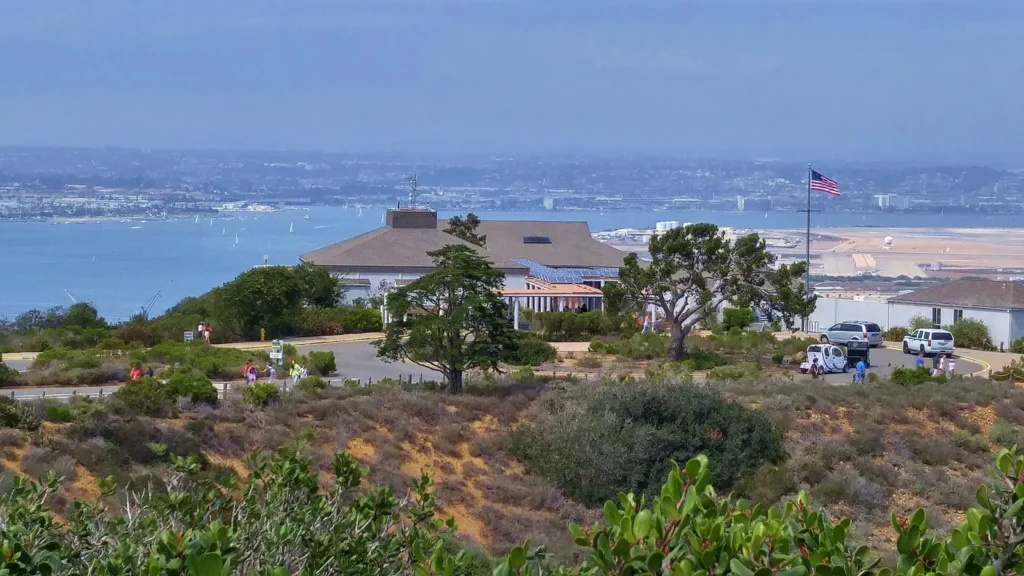
According to the National Park Service, the park is generally open daily from 9 a.m. to 5 p.m., closing on Thanksgiving and Christmas. Some areas close earlier than the park itself: the Bayside Trail and the Oceanside trails have closed around 4 p.m., and the tide pool area and Coastal Trail around 4:30 p.m. The visitor center has shorter hours, generally starting at 10 a.m. Arrive early to see everything without rushing.
Entrance Fees
The NPS charges an entrance fee per vehicle, per motorcycle, or per person on foot or bicycle. When this guide was written, the fees were about $20 per vehicle, $15 per motorcycle and $10 per person, with passes valid for seven days. Check the NPS fees page for current rates. The America the Beautiful annual pass and Cabrillo’s own annual pass are accepted, and the NPS holds several fee-free days each year.
Things to Do at Cabrillo National Monument
Old Point Loma Lighthouse
The Old Point Loma Lighthouse first lit its lamp in 1855 and is one of the oldest lighthouses on the West Coast. Because fog and low clouds often hid its light high on the point, it was replaced in 1891 by a new lighthouse closer to the water. Today the restored lighthouse is furnished as it might have looked when keepers lived there, and you can step inside to see the living quarters.
Cabrillo Statue and Overlook
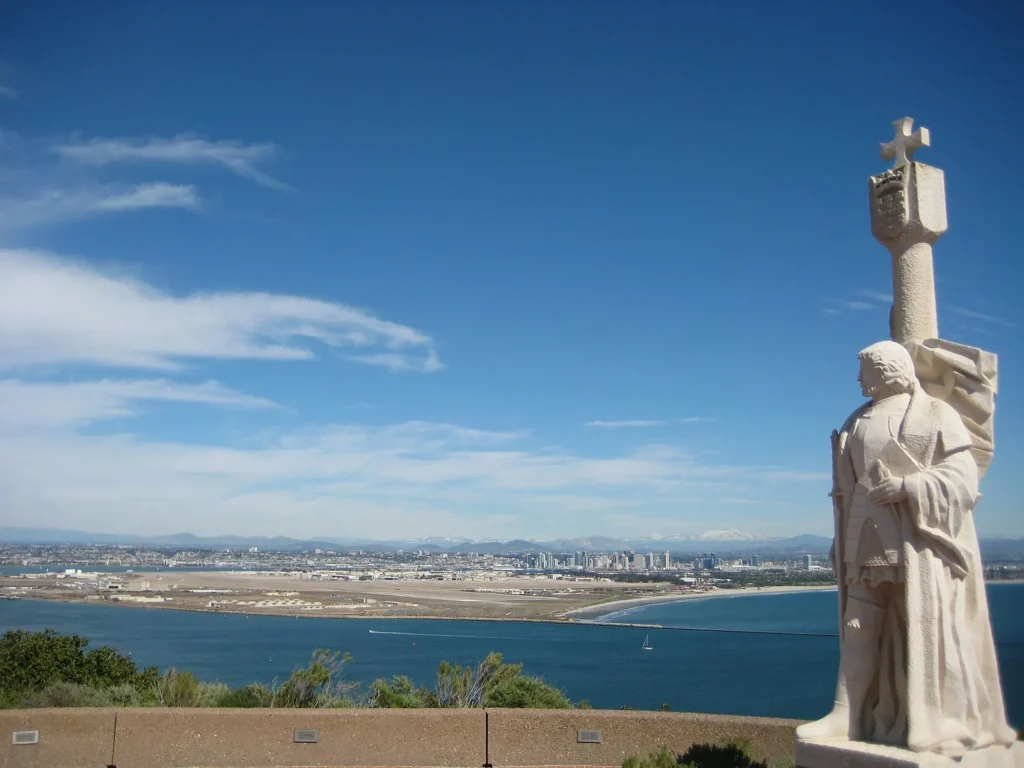
The statue of Juan Rodríguez Cabrillo overlooks San Diego Bay. The plaza around it has one of the best skyline and bay views in the city, with Coronado, North Island and the downtown towers spread out below.
Visitor Center and Exhibits
The visitor center has exhibits on Cabrillo’s voyage, the Kumeyaay people who lived here long before Europeans arrived, and the region’s maritime history. Short films and ranger programs run on many days.
Tide Pools
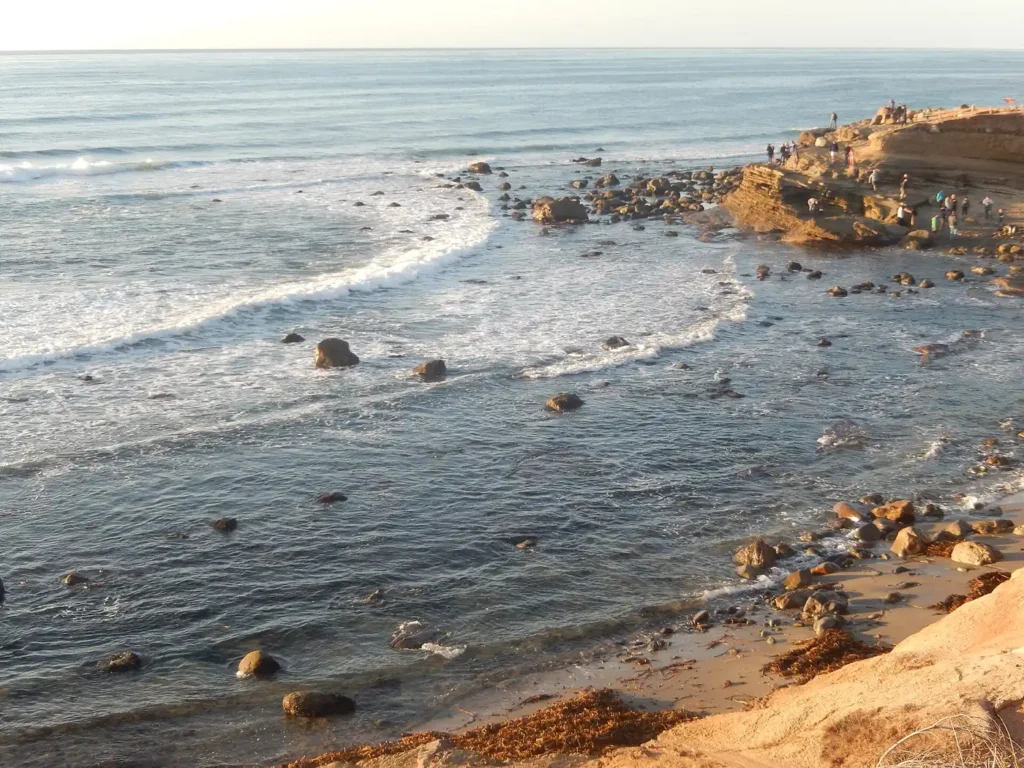
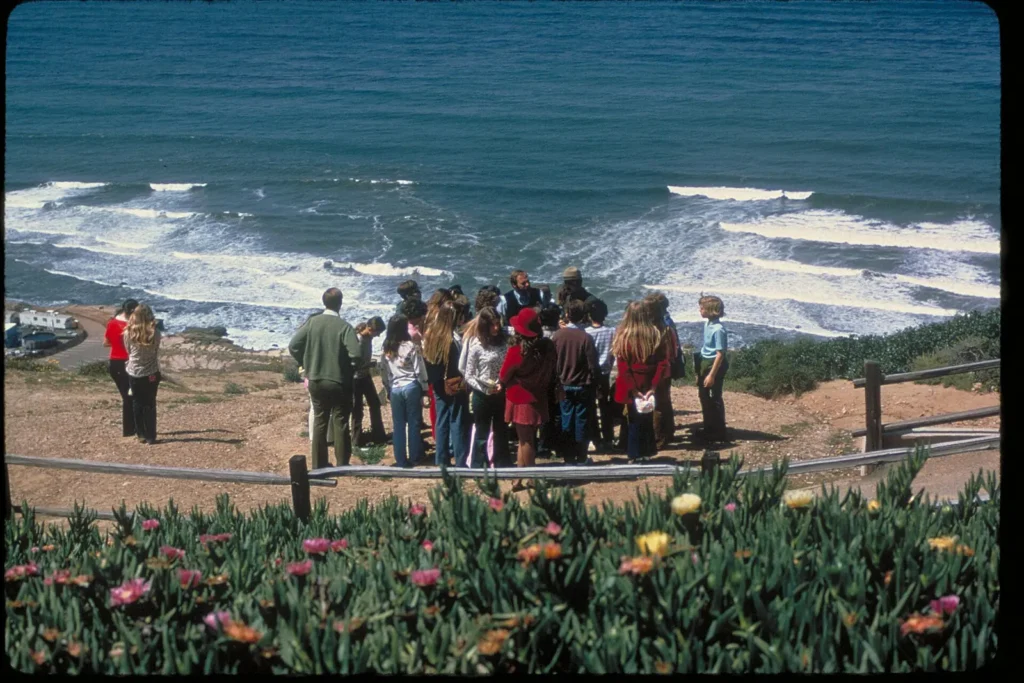
The rocky intertidal area on the ocean side of the point is one of the best-protected tide pool areas in Southern California. You might see sea anemones, crabs, sea stars, snails, octopuses and colorful algae.
Timing: The NPS recommends visiting during low tides of about 0.7 feet or lower, which happen most often in fall and winter, sometimes during the afternoon. Check the NOAA tide predictions before you go.
Getting there: The tide pool area is reached by car via a separate road from the main visitor area. The walk down to the tide pools is short, roughly a quarter to a half mile, but involves about 100 feet of elevation change and uneven, slippery rock.
Rules:
- Look but don’t take; collecting is prohibited.
- Don’t pick up or move animals.
- Step on bare rock where possible.
- Pets are not allowed in the tide pool area.
- Wear shoes with good grip.
Bayside Trail
The Bayside Trail descends from near the lighthouse along the bay side of the point, passing native coastal sage scrub and remnants of military installations. It’s roughly 2 to 2.5 miles round trip with an uphill return. Stay on the trail; the cliffs are unstable.
Whale Watching
The point is a great spot for watching Pacific gray whales during their migration, roughly December through March. The whale overlook near the lighthouse has interpretive signs. Bring binoculars. For boat tours, see our whale watching San Diego guide.
Military History
Point Loma has been important to coastal defense for over a century. Exhibits and remnants of World War II-era batteries and fire control stations tell the story of how the area protected San Diego Bay.
Who Was Juan Rodríguez Cabrillo?
Juan Rodríguez Cabrillo led an expedition for the Spanish Crown that sailed north from Mexico’s west coast in 1542. In September of that year, his ships entered what is now San Diego Bay, making his crew the first Europeans known to have set foot on the West Coast of the present-day United States. Cabrillo died during the expedition, but his voyage opened the door for later Spanish exploration and settlement. The monument, established in 1913, honors that landing. Long before Cabrillo, the Kumeyaay people lived in this region for thousands of years, and their story is also part of the park’s exhibits.
Photography Tips
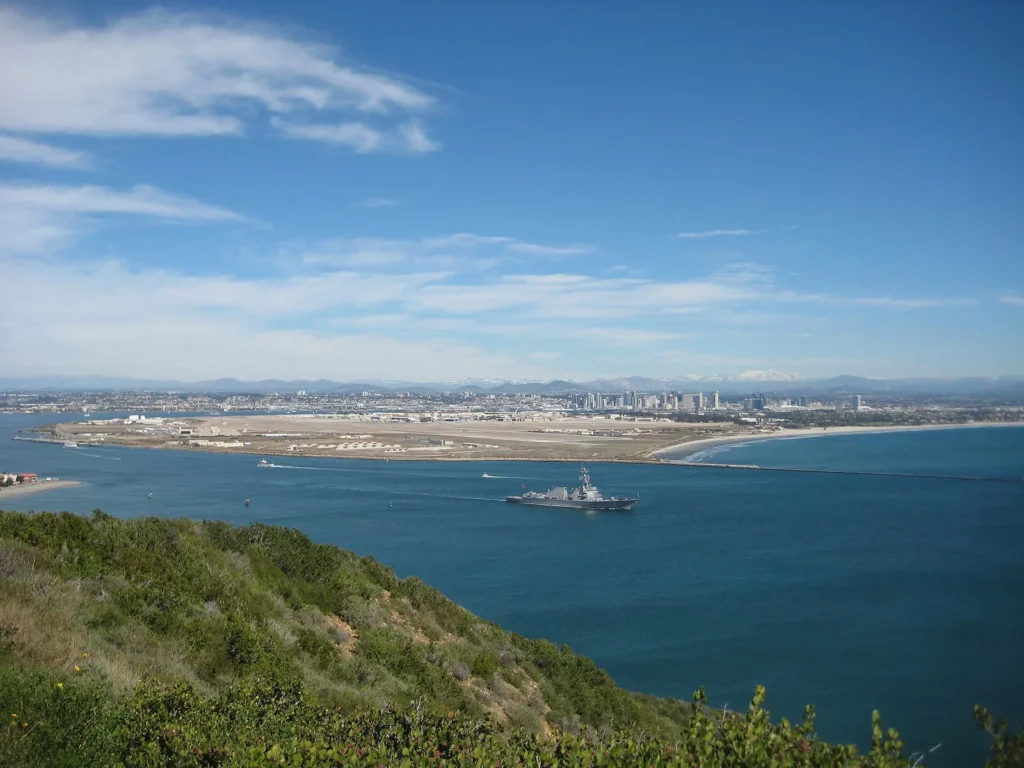
- Morning: soft light on the skyline and bay from the statue overlook.
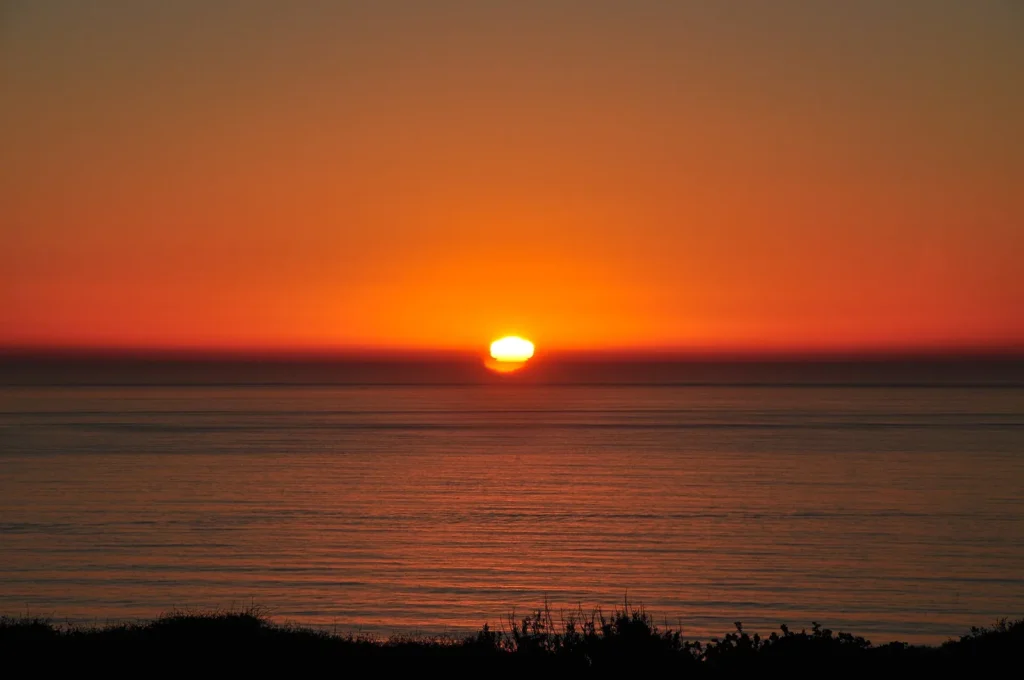
- Afternoon: clearer skies and stronger color over the Pacific.
- Tide pools: overcast days reduce glare on the water.
- Lighthouse: shoot from the path below for the classic angle.
Getting to Cabrillo National Monument
By Car
Cabrillo is about a 25- to 30-minute drive from downtown. Follow Rosecrans Street to Canon Street, then Catalina Boulevard and Cabrillo Memorial Drive. The road passes through Navy property and Fort Rosecrans National Cemetery. Parking is available at the visitor center and at the tide pools.
By Transit
MTS bus service runs to the monument on some routes and schedules. Check the MTS trip planner for current options. See our getting around San Diego hub.
Parking Tips
Parking can fill up on weekends, holidays and during low tides. Arrive soon after opening.
Best Time to Visit
- Winter: whale migration and the best low tides.
- Spring: wildflowers along the Bayside Trail.
- Summer: warmest weather, though mornings may be foggy.
- Fall: clear skies and good low tides.
Clear afternoons provide the best views. See best time to visit San Diego.
Suggested Half-Day Plan

- 9 a.m.: Arrive at opening and park at the visitor center.
- 9:15 a.m.: Walk to the Cabrillo statue and overlook.
- 10 a.m.: Visitor center exhibits and films.
- 10:45 a.m.: Old Point Loma Lighthouse.
- 11:30 a.m.: Whale overlook (in season) and Bayside Trail.
- Early afternoon: Drive down to the tide pools if the tide is low.
- Late afternoon: Watch sunset at Sunset Cliffs.
What to Bring
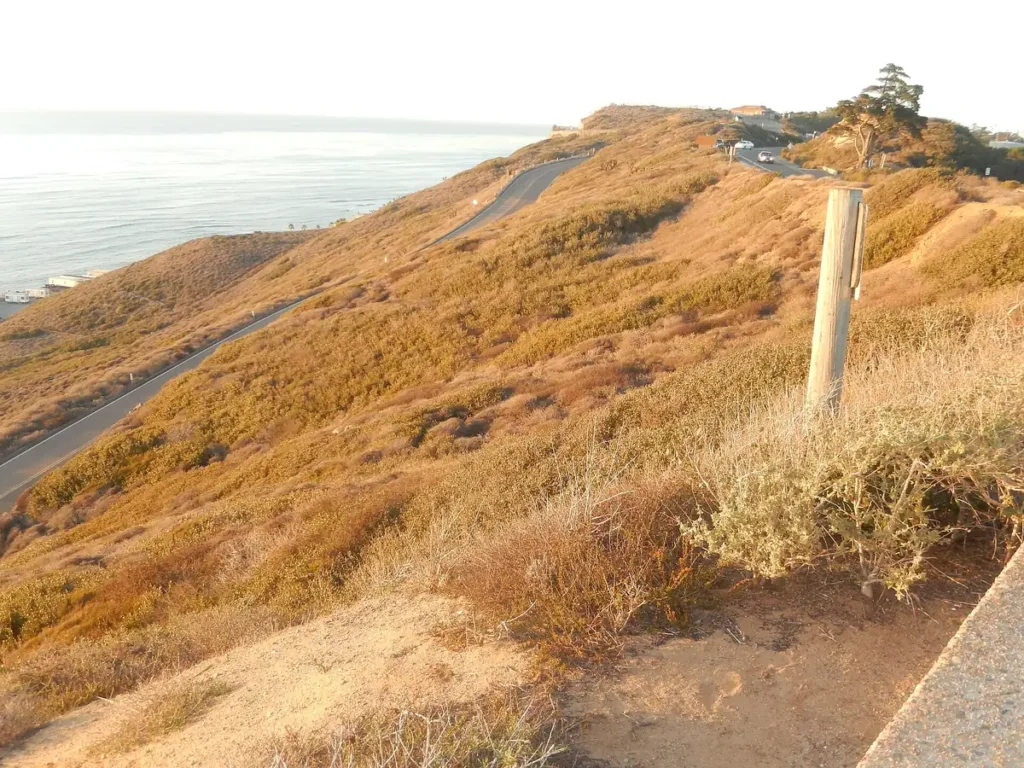
- Water and snacks; food options are limited.
- Sunscreen, hat and layers.
- Binoculars for whales and ships.
- Shoes with good grip for the tide pools.
Accessibility
The main visitor center area, statue plaza and overlooks are generally accessible, though the lighthouse path has a slope. The tide pools and Bayside Trail involve uneven terrain. Contact the park for current accessibility information.
Nearby Attractions

- Sunset Cliffs: dramatic coastline in Point Loma.
- Ocean Beach: see Ocean Beach Pier.
- Liberty Station: dining and shopping.
- Shelter Island and Harbor Island: bay views.
- Fort Rosecrans National Cemetery: sits along the drive.
Before You Go: Quick Checklist
Use this short checklist to plan ahead and avoid common surprises:
- Check hours, fees and tide pool access on the official NPS website.
- Look up a tide chart before visiting the tide pools.
- Arrive early on weekends and holidays for parking.
- Bring water, sunscreen and layers, since the point can be windy.
- Wear shoes with good grip for wet, slippery rocks.
- Carry binoculars during whale-watching season.
Frequently Asked Questions
How much does it cost to enter Cabrillo National Monument?
The NPS charges per vehicle, motorcycle or person. Recent fees were $20 per vehicle and $10 per person, valid for seven days. Check the NPS website for current fees.
How long should I spend at Cabrillo National Monument?
Plan two to four hours, longer if you visit the tide pools.
When is the best time to see the tide pools?
During low tides of about 0.7 feet or lower, most often in fall and winter.
Can you bring dogs to Cabrillo National Monument?
Pets are restricted in many areas, including the tide pools. Check the NPS website for current pet rules.
Can I see whales from Cabrillo National Monument?
Yes, during the gray whale migration, roughly December through March.
Is Cabrillo National Monument worth visiting?
Yes. You get some of San Diego’s best views, plus history, tide pools and trails.
Is there food at Cabrillo National Monument?
Food options inside the park are very limited, so plan ahead. Bring water and snacks, especially if you plan to explore the tide pools or Bayside Trail. For a full meal, head back into Point Loma or Ocean Beach, both a short drive away. Check the National Park Service for current visitor services.
Photo credits
Featured image: Bernard Gagnon / Wikimedia Commons, CC BY-SA 3.0; Hours: Garyscub / Wikimedia Commons, CC BY-SA 4.0; Things to Do at Cabrillo National Monument: Billy Hathorn / Wikimedia Commons, CC BY-SA 3.0; Who Was Juan Rodríguez Cabrillo?: Robert Arends / Wikimedia Commons, CC BY-SA 4.0; Photography Tips: Robert Arends / Wikimedia Commons, CC BY-SA 4.0; Getting to Cabrillo National Monument: NPS staff / Wikimedia Commons, Public domain; Best Time to Visit: Amaury Laporte / Wikimedia Commons, CC BY 2.0; Suggested Half-Day Plan: Frank Schulenburg / Wikimedia Commons, CC BY-SA 4.0; What to Bring: Billy Hathorn / Wikimedia Commons, CC BY-SA 3.0; Nearby Attractions: Christian David / Wikimedia Commons, CC BY-SA 4.0.