
Weather · Hub guide
San Diego Weather by Month: A Month-by-Month Climate Guide
San Diego is famous for its mild climate, but the weather still shifts through the year, from whale-watching winters and May Gray mornings to warm, sunny falls. Here’s what to expect each month, how microclimates change things, and what to pack and plan.
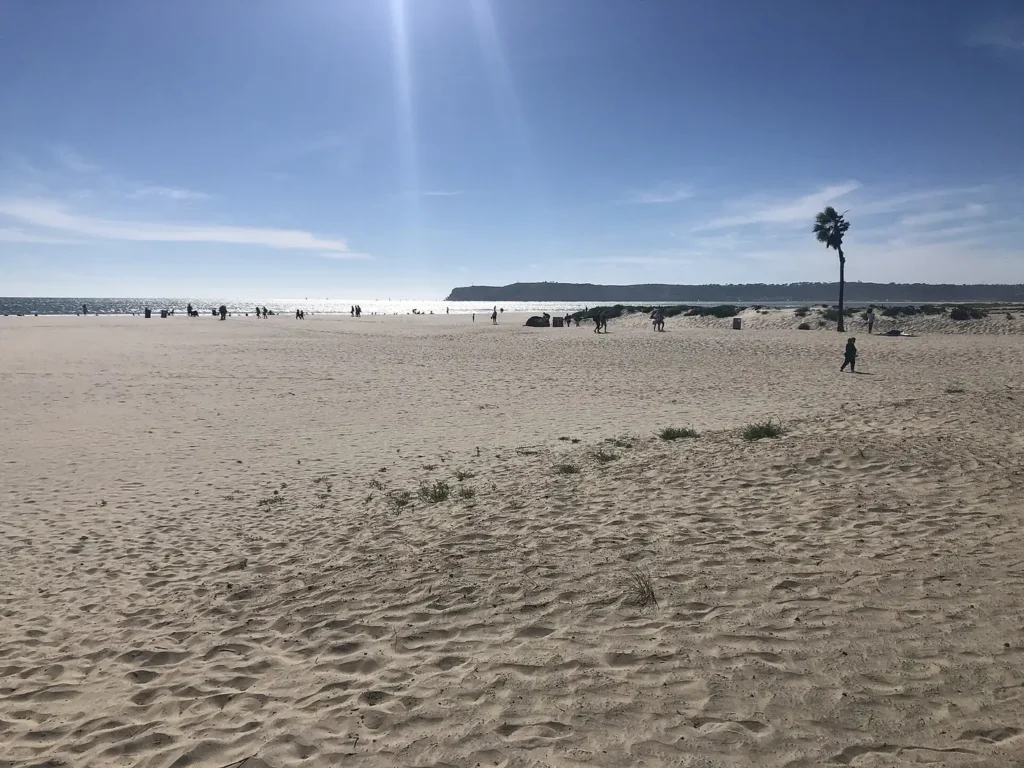
San Diego weather at a glance
- Climate Mediterranean: mild, wetter winters and dry, warm summers
- Coastal daytime highs Roughly the 60s °F in winter to the 70s °F in summer
- Rain Low; most falls from about November to March
- Ocean High 50s °F in late winter to around 70 °F in late summer
- Cloudiest stretch May Gray and June Gloom at the coast
- Warmest, sunniest months Often August through October
In this guide
- San Diego climate overview
- Understanding microclimates
- San Diego weather by month
- San Diego weather by season
- Ocean temperatures
- May Gray and June Gloom explained
- Santa Ana winds
- Rain in San Diego
- Snow near San Diego
- Best months for…
- Weather and activities
- Coastal vs. inland weather compared
- What to pack by season
- Daylight through the year
- Sun, UV and staying comfortable
- Weather for boating and whale watching
- How to check the forecast
- Tips for planning around the weather
- Living with San Diego’s climate
- Extreme weather and safety
- Frequently asked questions
- More guides
San Diego is famous for its mild climate, but understanding San Diego weather by month helps you plan the right activities and pack the right clothes. Coastal areas stay mild all year, while inland valleys get hotter summers and cooler nights.
This hub explains how the weather changes through the year, with links to our detailed monthly guides such as San Diego weather in January and San Diego weather in February. Browse all of our weather coverage in the Weather category.
We describe typical patterns in general, rounded terms. For forecasts and official climate data, always check the National Weather Service San Diego office.
San Diego climate overview
San Diego has a Mediterranean-type climate, with mild, relatively wetter winters and dry, warm summers:
- Mild temperatures year-round at the coast, with daytime highs typically in the 60s °F in winter and the 70s °F in summer.
- Low rainfall, mostly between November and March. Coastal totals are roughly 10 inches in a typical year, but they vary a lot from year to year.
- A cool ocean, generally from the high 50s °F in late winter to around 70 °F in late summer.
- The marine layer, which brings cloudy mornings, especially in May and June.
- Santa Ana winds, mostly in fall and winter, which bring hot, dry conditions.
Understanding microclimates
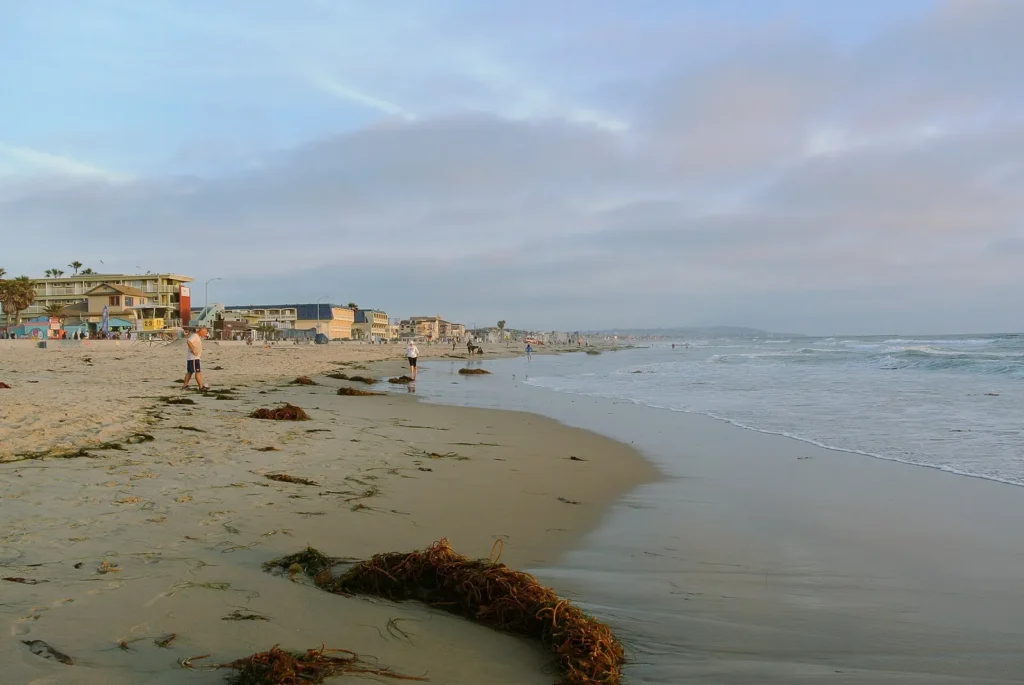
Coast
La Jolla, Pacific Beach and Coronado stay mild, with the smallest temperature swings. Mornings are often cloudy in late spring and early summer.

Inland valleys
El Cajon, Escondido and Santee get hotter summers and cooler winter nights.

Mountains
Julian and the Laguna Mountains are cooler and can get snow in winter.
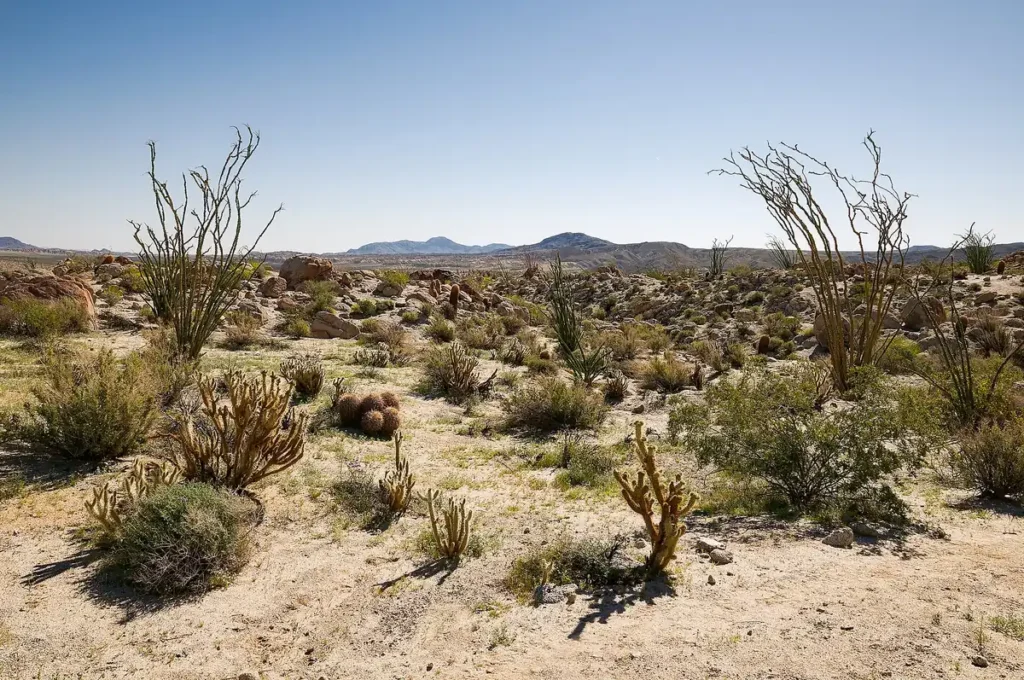
Desert
Anza-Borrego is very hot in summer and pleasant in winter.
Even a 10- to 15-mile drive inland can mean a big jump in temperature on a summer day. On the same afternoon, it might be cool and cloudy at the beach and hot and sunny in the eastern suburbs, so check the forecast for the specific area you’ll visit rather than relying on a single citywide number.
San Diego weather by month

January
One of the coolest months, with mild days and chilly nights. It’s one of the rainier months, but many days are sunny. Do: whale watching, museums, hikes on clear days. Wear: a warm evening jacket, layers and an umbrella. See January weather.

February
Similar to January, often with some rain, and days begin to lengthen. Do: whale watching, Valentine’s dinners, low-tide tide pooling. Wear: layers and a rain jacket. See February weather.

March
Spring arrives with occasional rain and green hillsides, and desert wildflowers may bloom after wet winters. Do: Anza-Borrego wildflowers if reports look good, green-season hikes, the end of gray whale season. Wear: layers and closed shoes for muddy trails.

April
Mild and generally drier, with the marine layer becoming more common. Do: tide pools at low tide, hiking, Balboa Park gardens, Padres games. Wear: light layers and an evening sweater.

May
“May Gray” often brings overcast coastal mornings, with afternoon sun on many days. Inland is warmer and sunnier. Do: afternoon beach time, morning museums. Wear: layers you can peel off.

June
“June Gloom” continues the cloudy coastal pattern, especially early in the month. Do: the San Diego County Fair, which typically opens in June, and sunnier inland trips such as the Safari Park. Wear: a light jacket and sunscreen.

July
Usually sunnier and warmer, with the ocean starting to warm. Do: Fourth of July fireworks, Comic-Con, beach days, outdoor concerts. Book hotels early. Wear: summer clothes, swimwear and a light evening layer.

August
One of the warmest months, with warm water and occasional humidity. Do: swimming, surfing, kayaking and snorkeling; leopard sharks often gather at La Jolla Shores in late summer. Wear: light clothing and sun protection.
September
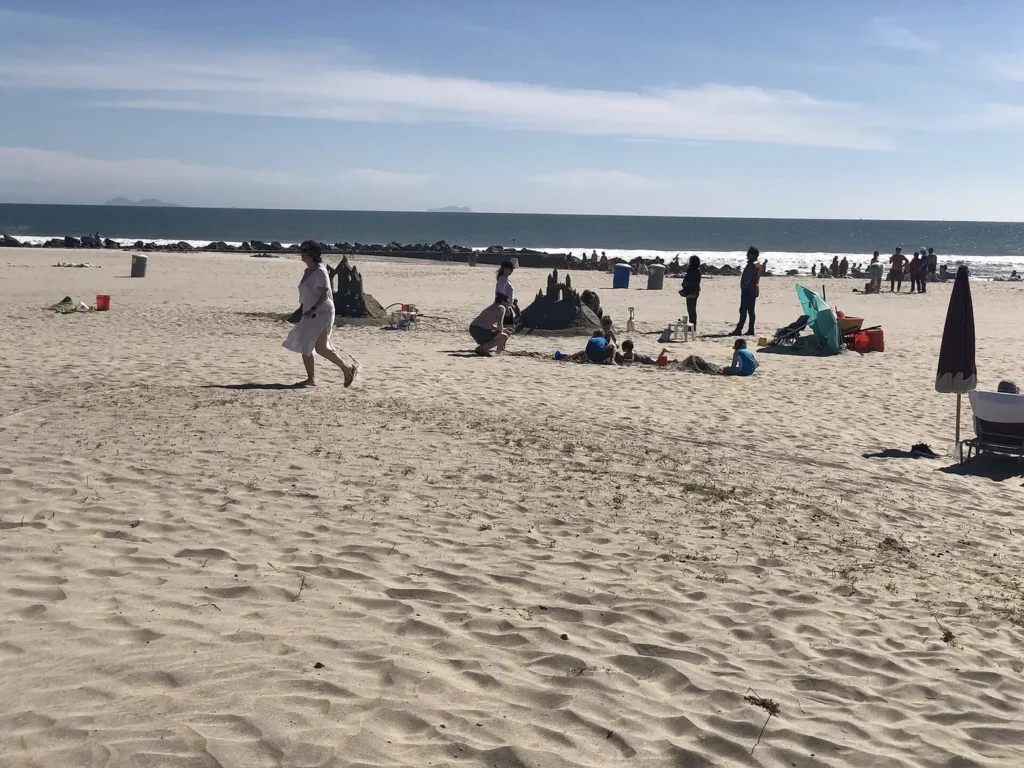
Often one of the warmest months, with some of the warmest ocean temperatures; heat waves are possible. Do: beaches with smaller crowds after Labor Day, dawn hikes inland. Wear: summer clothing and a hat.
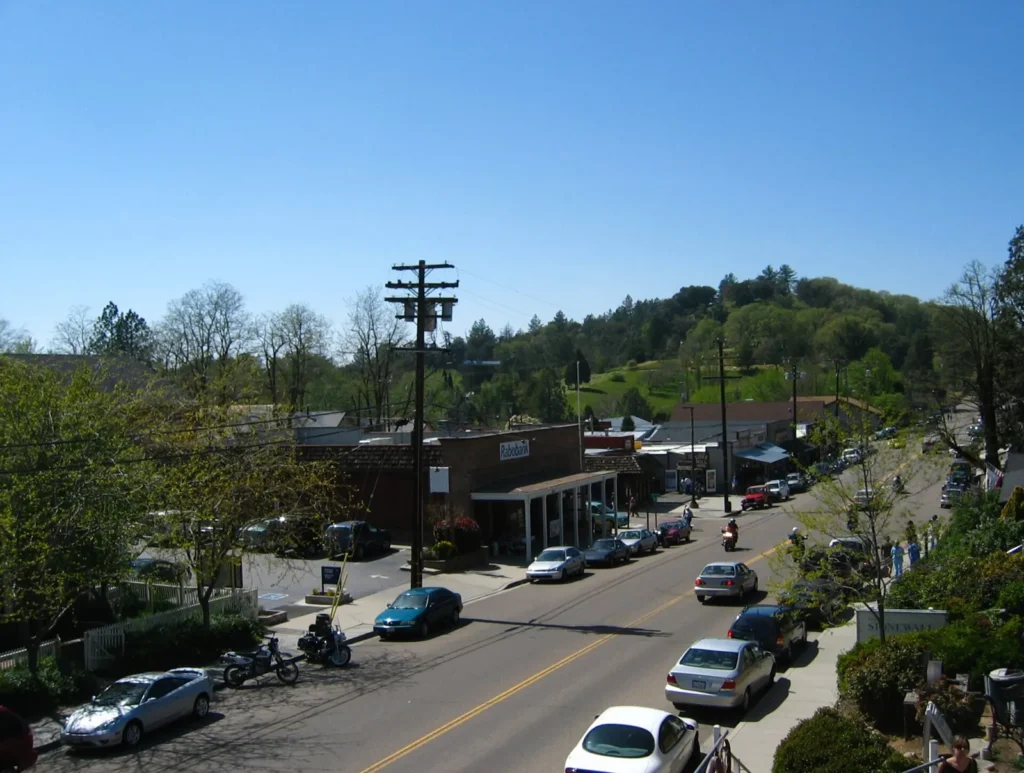
October
Often warm and sunny with fewer crowds, but Santa Ana winds can bring hot, dry days and fire danger. Do: fall festivals, Halloween events, Fleet Week activities, apple season in Julian. Wear: summer clothes by day, a light layer at night.

November
Mild, with the rainy season beginning and Santa Anas still possible. Do: San Diego Beer Week, early holiday events, quieter attractions. Wear: layers and a light jacket.

December
Cool and mild, with some rain and plenty of holiday spirit. Do: December Nights in Balboa Park, light displays, boat parades and the start of gray whale migration. Wear: a warm jacket, sweaters and an umbrella. See Christmas lights in San Diego.
San Diego weather by season
| Season | What to expect | Best for |
|---|---|---|
| Winter (Dec–Feb) | Cool, mild days, chilly nights and most of the year’s rain | Whale watching, museums, fewer crowds |
| Spring (Mar–May) | Mild, green landscapes and wildflowers; May Gray arrives late in the season | Hiking, gardens, tide pools |
| Summer (Jun–Aug) | Cloudy June mornings at the coast; July and August sunnier and warmer | Beaches, festivals, water sports |
| Fall (Sep–Nov) | Often the warmest, sunniest time, with the warmest ocean; Santa Anas possible | Beach days without summer crowds |
Ocean temperatures
The Pacific off San Diego is cool most of the year. It’s typically coolest in late winter and spring and warmest in late summer and early fall. Many swimmers and surfers wear wetsuits for much of the year. Check current water temperatures and surf forecasts from the National Weather Service before you swim.
May Gray and June Gloom explained
Why the coast goes gray
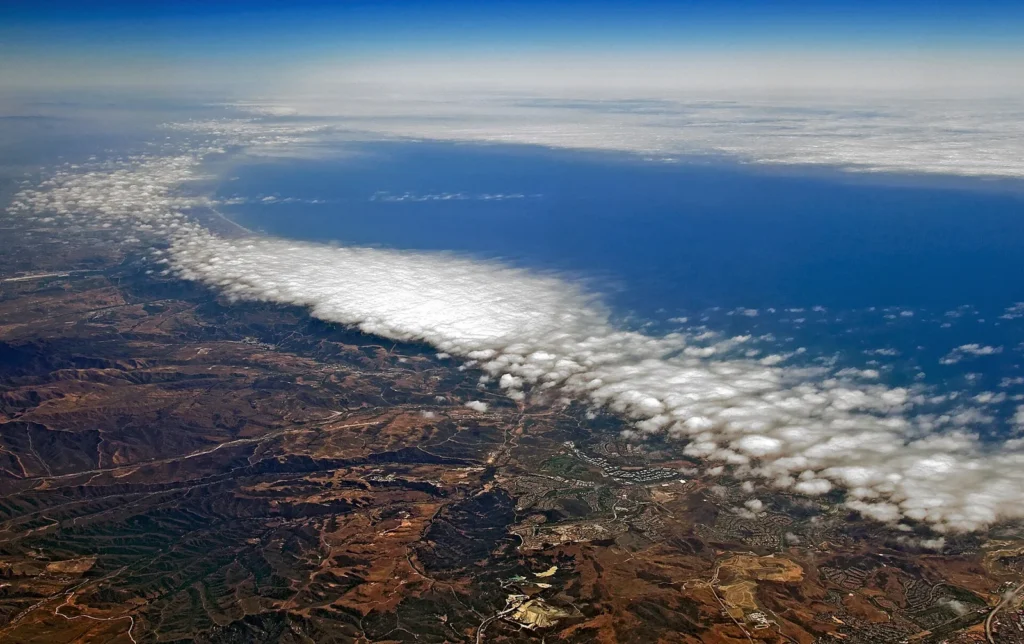
In late spring and early summer, cool ocean water and warmer air create a marine layer, a blanket of low clouds along the coast. It typically burns off by midday or afternoon, though some days stay overcast at the beach. Heading inland usually means more sun, so it’s a good time for the Safari Park, Julian or inland hikes in the morning.
Santa Ana winds
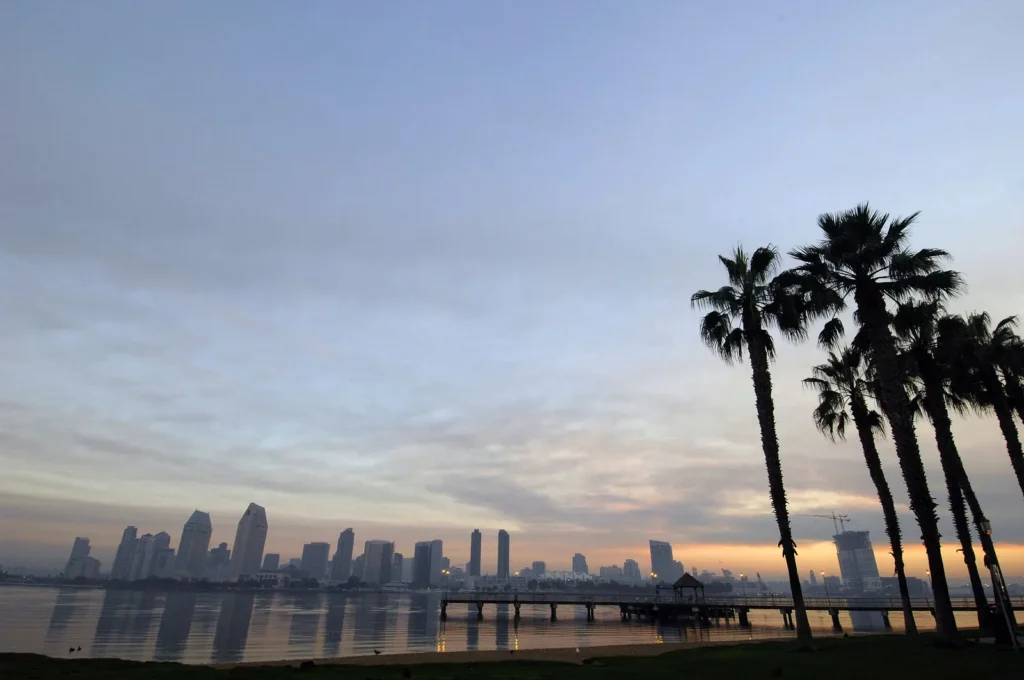
Hot, dry desert winds
Santa Ana winds blow from the desert toward the coast, mainly from fall through spring. They bring hot, dry and windy conditions, unusually clear skies and higher wildfire risk. Major fires, such as those in October 2007, have spread during Santa Ana events. Follow Alert San Diego and county updates during red flag warnings.
Rain in San Diego
A short rainy season
Rain is infrequent and mostly falls from November through March. Some winters are much wetter than others, depending on patterns like El Niño. After heavy rain, avoid ocean swimming for about 72 hours because of runoff, and check sdbeachinfo.com for advisories.
Snow near San Diego
Mountain snow days
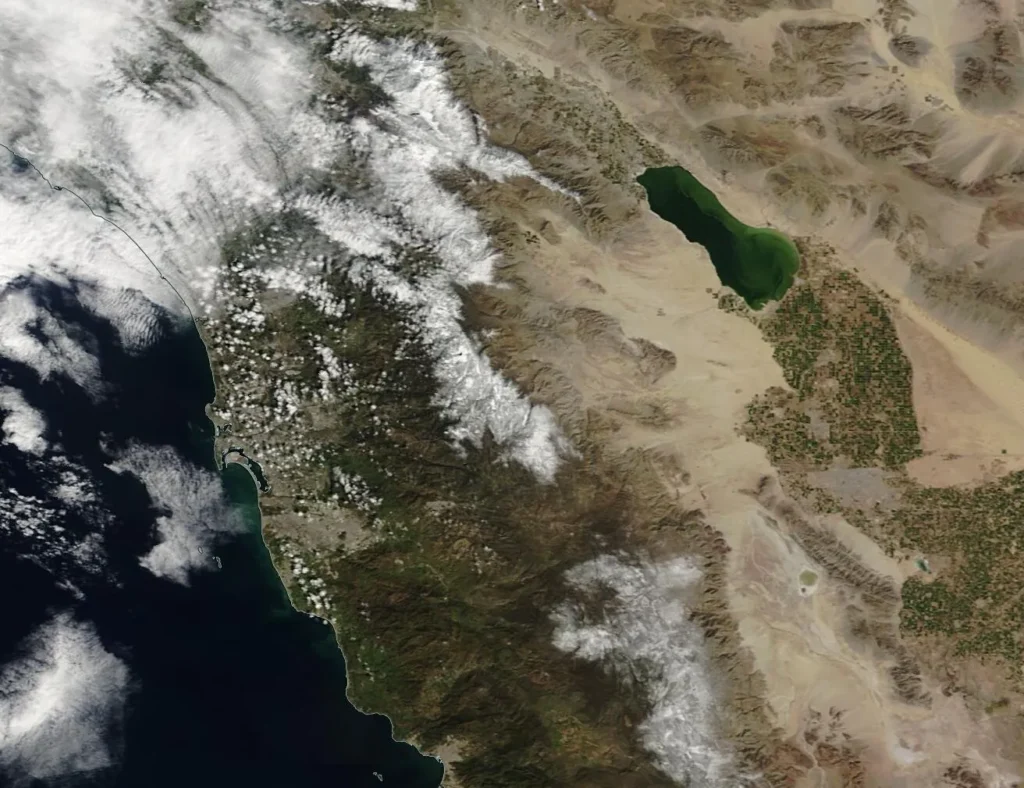
It doesn’t snow in the city, but the mountains east of San Diego, including Julian, Mount Laguna and Palomar, occasionally get snow after cold winter storms. Snow days draw big crowds, so check road conditions and chain requirements with Caltrans before you drive.
Best months for…
| Goal | Best months |
|---|---|
| Beach days | Late July through early October, when the water is warmest |
| Whale watching | About December through April for gray whales |
| Hiking | Fall through spring; summer hikes are best early in the day |
| Lower hotel prices | Late fall and winter, outside holidays and major events |
| Avoiding crowds | Fall after Labor Day, and winter outside holidays |
See our best time to visit San Diego guide.
Weather and activities
- Beaches: plan beach days for late summer and fall. See San Diego beaches.
- Outdoor adventures: spring and fall are ideal for hiking and biking. See outdoor activities in San Diego.
- Events: summer is packed with festivals. See San Diego events.
- Family trips: summer and spring break are popular. See family vacation in San Diego.



Coastal vs. inland weather compared
| Season | Coast | Inland valleys | Mountains | Desert |
|---|---|---|---|---|
| Winter | Mild days, cool nights | Mild days, cold nights | Cold, possible snow | Pleasant days |
| Spring | Mild, cloudier late | Warm | Cool | Warm, wildflowers |
| Summer | Warm, cloudy June | Hot | Warm | Very hot |
| Fall | Warm, sunny | Hot spells | Mild | Hot early, then pleasant |
What to pack by season
Packing list
- Winter: layers, a light jacket, a sweater for evenings and a compact umbrella.
- Spring: layers, a jacket for cool mornings and comfortable shoes for green trails.
- Summer: swimwear, sunscreen, a hat and a light sweater for cool coastal evenings.
- Fall: summer clothes plus a light layer for evenings.
- Year-round: sunscreen, sunglasses, comfortable shoes and layers. The sun is strong all year, and coastal evenings can be cool even in summer.
Daylight through the year
Day length changes more than many visitors expect. Around the winter solstice in late December, the sun sets before 5 p.m., so plan hikes and beach walks for earlier in the day. Around the summer solstice in June, sunset comes around 8 p.m., which leaves long evenings for beach bonfires and outdoor dining. Daylight saving time starts in March and ends in early November, shifting sunset by an hour. For exact times, check a sunrise and sunset calculator for your date.
Sun, UV and staying comfortable
San Diego’s sun is strong year-round, and the UV index can be high even on cool or cloudy days, especially from late spring through early fall. Use broad-spectrum sunscreen, reapply after swimming, and wear a hat and sunglasses. Clouds and ocean breezes can make it feel cooler than it is, which is why sunburn is one of the most common visitor complaints during May Gray and June Gloom.
Hydration matters too. Inland and desert trips in summer and early fall can involve dangerous heat, so carry water, avoid midday exertion and know the signs of heat exhaustion.
Weather for boating and whale watching
Ocean conditions can differ from what you see on land. Mornings are often calmer, while afternoon winds build swells and chop, especially in spring. Winter storms bring bigger swells and occasional small craft advisories, which can cancel whale watching trips. Check the marine forecast from the National Weather Service, dress in warm layers even on sunny days, and consider motion sickness remedies if you’re prone to seasickness. See our whale watching in San Diego guide.
How to check the forecast
For the most accurate information, use the National Weather Service San Diego forecast office, which issues forecasts, marine forecasts and warnings for the region. For beaches, look for surf and rip current statements. During fire season, watch for red flag warnings. For water quality, check county beach advisories, especially after rain.
Tips for planning around the weather
- Build flexibility into your itinerary so you can swap beach and museum days.
- During May Gray and June Gloom, plan beach visits for the afternoon.
- Head inland for sunshine on cloudy coastal days, and to the coast for relief on hot inland days.
- In summer, schedule hikes for early morning.
- In winter, bring warmer clothes for evenings and early-morning whale watching trips.
- Remember that sunburn is common even on overcast days.
Living with San Diego’s climate
If you’re moving to San Diego, the climate is a big draw. Many older homes near the coast don’t have air conditioning because summers are moderate, but inland homes usually do, and late-summer heat waves have made AC more common everywhere. Heating is used on cool winter nights. Learn more in our living in San Diego guide.
Extreme weather and safety
- Heat waves: they can hit inland areas hard, especially in late summer and fall. Stay hydrated and avoid strenuous activity in midday heat.
- Wildfires: risk is highest in late summer and fall, especially during Santa Ana winds. Sign up for alerts and know your evacuation route.
- Storms: winter storms can bring heavy rain, high surf and local flooding.
- Earthquakes: not weather, but a natural hazard in Southern California. Know basic preparedness.
Frequently asked questions
What is the best month to visit San Diego for weather?
September and October often bring warm, sunny weather with warm ocean water and fewer crowds.
What is the rainiest month in San Diego?
Rain is concentrated from December through March, and the wettest month varies from year to year.
Is San Diego warm in winter?
Days are mild at the coast, but nights are cool. It’s not beach-hot weather.
Why is San Diego cloudy in June?
The marine layer, known as June Gloom, creates morning clouds at the coast.
Does it snow in San Diego?
Not in the city, but the nearby mountains occasionally get snow in winter.
Is San Diego humid?
San Diego is generally not very humid, though late summer can bring muggy days, occasionally with monsoonal moisture from the east.
Do I need a jacket in San Diego?
Usually, yes. Even in summer, evenings near the coast can be cool, so a light jacket or sweater is a good idea.
When is wildfire season in San Diego?
Fire risk is highest from late summer through fall, especially during Santa Ana wind events, though fires can occur at other times.
How cold is the ocean in San Diego?
The ocean ranges from the high 50s °F in late winter and spring to around 70 °F in late summer.
More guides
- San Diego Weather in February: What to Expect
- Best Time to Visit San Diego: Month-by-Month Guide
- San Diego Weather in January: Temps, Rain & What to Pack
- Things to Do in San Diego This Weekend (Updated Every Thursday)
Photo credits
Featured image: FASTILY / Wikimedia Commons, CC BY-SA 4.0; Coast: Adbar / Wikimedia Commons, CC BY-SA 3.0; Inland valleys: Blervis / Wikimedia Commons, CC0; Mountains: Adbar / Wikimedia Commons, CC BY-SA 3.0; Desert: Laurens R. Krol / Wikimedia Commons, CC BY 4.0; January: Carlos Valenzuela / Wikimedia Commons, CC BY-SA 4.0; February: Sharon Mollerus / Wikimedia Commons, CC BY 2.0; March: Rob.Bertholf / Wikimedia Commons, CC BY 2.0; April: Matthew T Rader / Wikimedia Commons, CC BY-SA 4.0; May: RightCowLeftCoast / Wikimedia Commons, CC BY-SA 4.0; June: SD Dirk / Wikimedia Commons, CC BY 2.0; July: Jon Sullivan / Wikimedia Commons (public domain); August: Invertzoo / Wikimedia Commons, CC BY-SA 3.0; September: FASTILY / Wikimedia Commons, CC BY-SA 4.0; October: –Microsomen 17:11, 31 May 2005 (UTC) / Wikimedia Commons, CC BY 2.0; November: Tuxyso / Wikimedia Commons, CC BY-SA 3.0; December: Roman Eugeniusz / Wikimedia Commons, CC BY-SA 3.0; Why the coast goes gray: Kevincollins123 / Wikimedia Commons, CC BY-SA 3.0; Hot, dry desert winds: U.S. Navy photo by Lt. Nick Sherrouse / Wikimedia Commons (public domain); A short rainy season: iXavier / Wikimedia Commons, CC BY-SA 3.0; Mountain snow days: MODIS Land Rapid Response Team, NASA GSFC / Wikimedia Commons (public domain); Sunset at Crystal Pier in Pacific Beach: Dirk Hansen / Wikimedia Commons, CC BY-SA 3.0; Clouds over the Pacific off San Diego: Ronen Ackerman / Wikimedia Commons, CC BY 3.0; A calm sunset over Mission Bay: Tony Webster / Wikimedia Commons, CC BY 3.0; Clear skies over the Torrey Pines cliffs: Dirk Hansen / Wikimedia Commons, CC BY-SA 3.0; Puffy clouds over the downtown skyline: Amantonacci / Wikimedia Commons, CC BY-SA 4.0; A satellite view of a late-summer tropical storm near Southern California: MODIS Land Rapid Response Team, NASA GSFC / Wikimedia Commons (public domain).