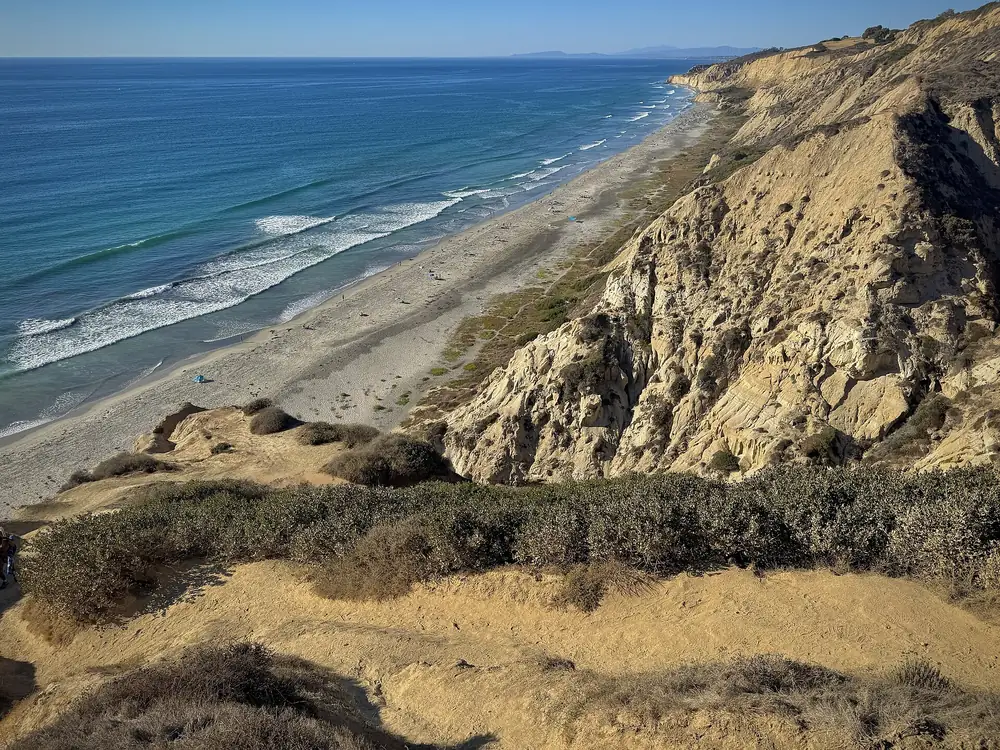
A Torrey Pines hike is one of San Diego’s classic outdoor experiences. Torrey Pines State Natural Reserve protects one of the rarest pine trees in the United States, along with eroded sandstone bluffs and sweeping views over the Pacific. The trails are short, scenic and suitable for most fitness levels, which makes the reserve popular with locals and visitors alike.
In this guide
- About Torrey Pines State Natural Reserve
- Torrey Pines Hike Trails
- Popular Loop Ideas
- Parking for Your Torrey Pines Hike
- Rules to Know
- Visitor Center and Lodge
- Torrey Pines State Beach
- Best Time for a Torrey Pines Hike
- Plants and Wildlife on Your Torrey Pines Hike
- Trail Etiquette at Torrey Pines
- Combining Your Hike With the Beach
- What to Bring
- Nearby Attractions
- Accessibility
- Frequently Asked Questions
This guide explains each trail, parking, rules and how to time your visit. For more trails, see our best hikes in San Diego guide and the outdoor activities in San Diego hub.
About Torrey Pines State Natural Reserve
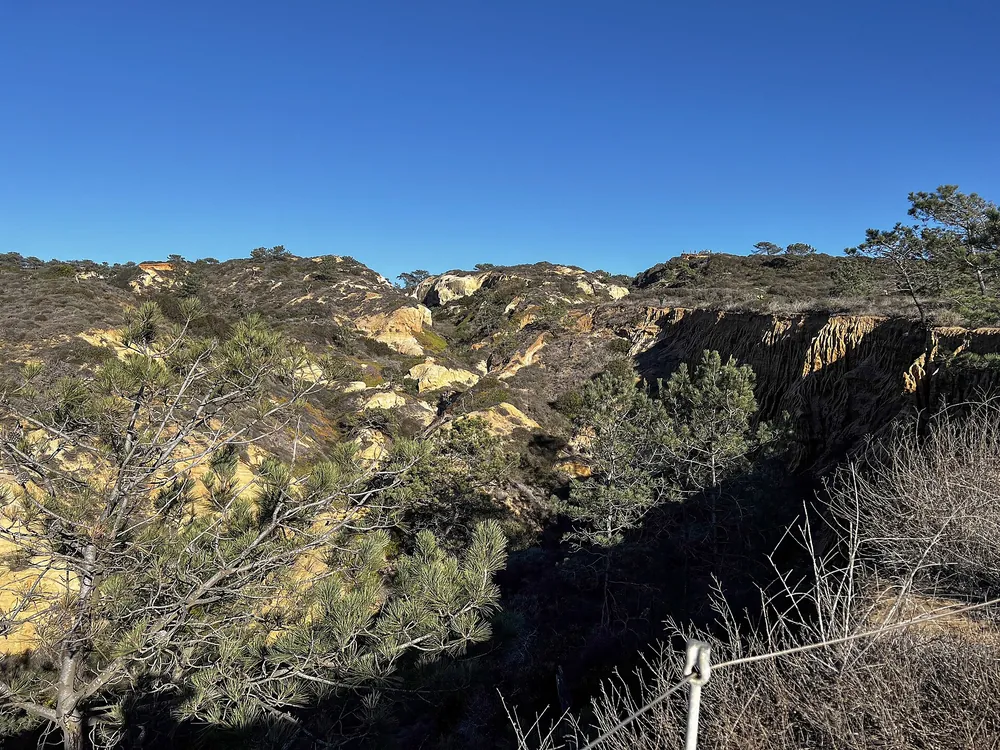
The reserve sits between La Jolla and Del Mar. Its namesake, the Torrey pine, grows naturally only here and on Santa Rosa Island off the California coast. Because the reserve exists to protect this fragile habitat, rules are stricter than in many parks.
The reserve is managed by California State Parks, and the nonprofit Torrey Pines Association supports education and conservation.
Torrey Pines Hike Trails
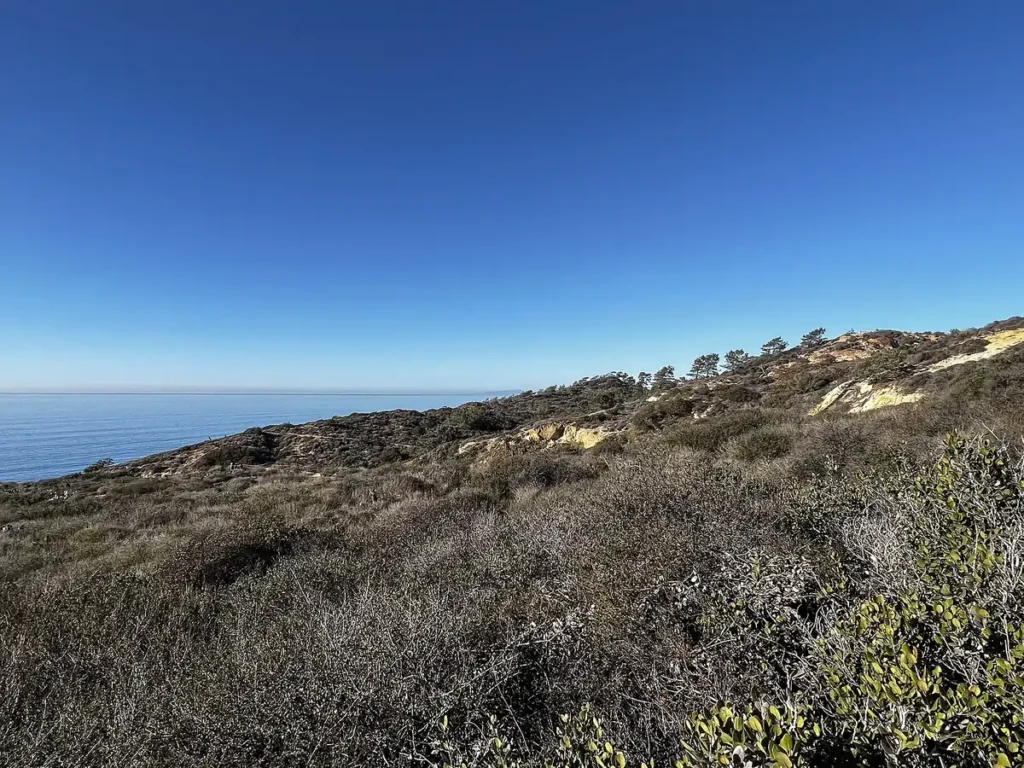
Guy Fleming Trail

A gentle loop of well under a mile with ocean overlooks, wildflowers in spring and sculpted sandstone. Families and beginners do well here.
Razor Point Trail
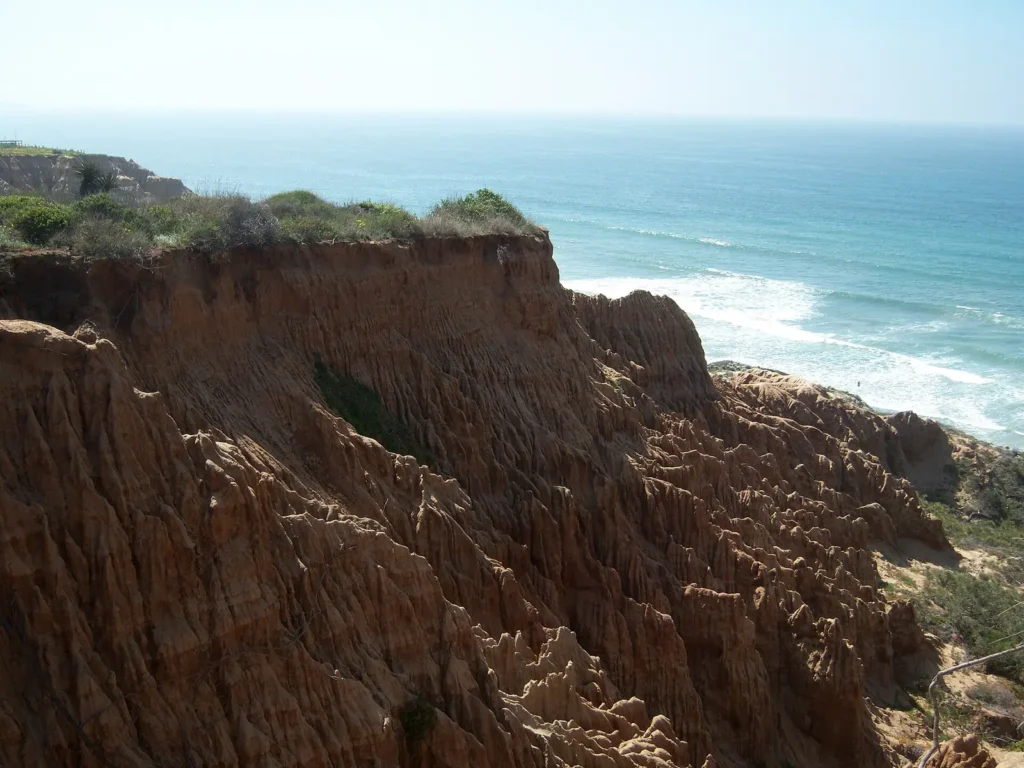
This trail leads to dramatic viewpoints over eroded ravines and the ocean. It connects with other trails, so you can extend your walk.
Beach Trail
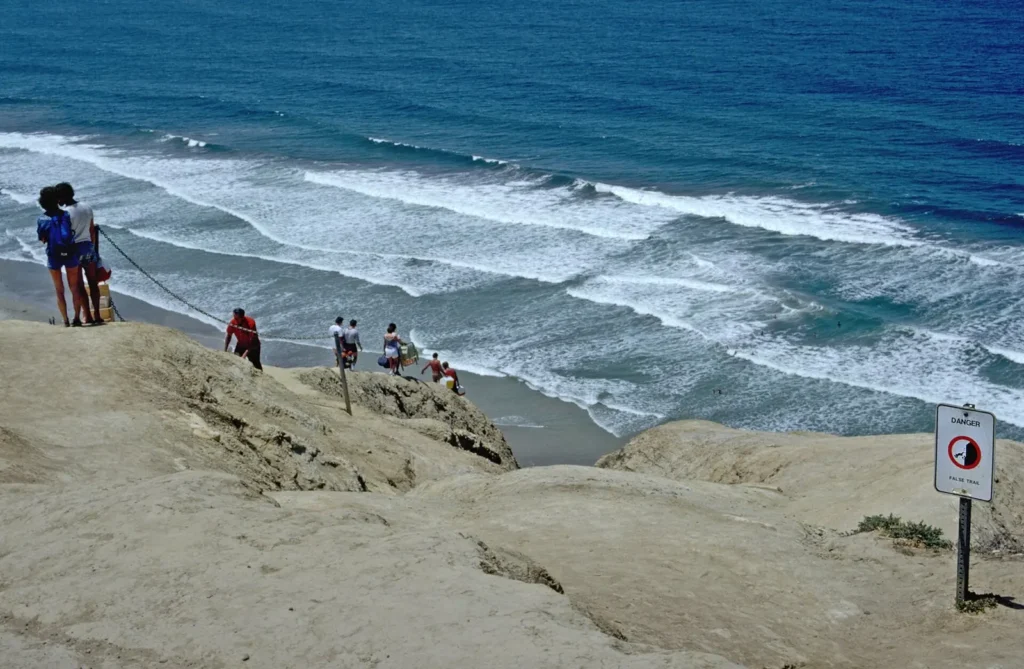
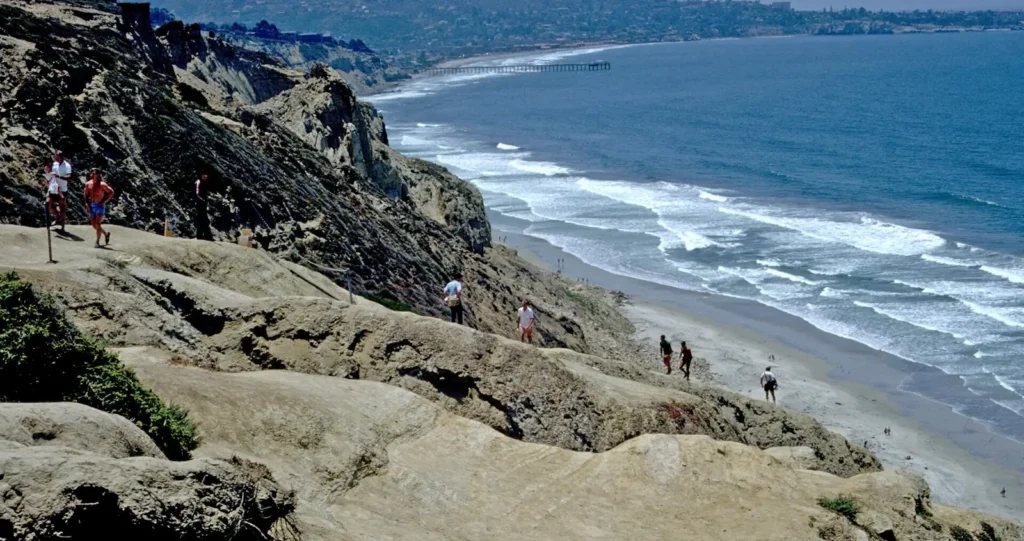
The Beach Trail descends from the top of the reserve to the sand, passing Red Butte and Yucca Point. The last stretch includes stairs. Remember you’ll have to climb back up.
Broken Hill Trail
A longer trail with views of Broken Hill and the coastline. You can combine it with the Beach Trail for a loop.
Parry Grove Trail
A short loop with stairs that winds through Torrey pines and native plants.
High Point
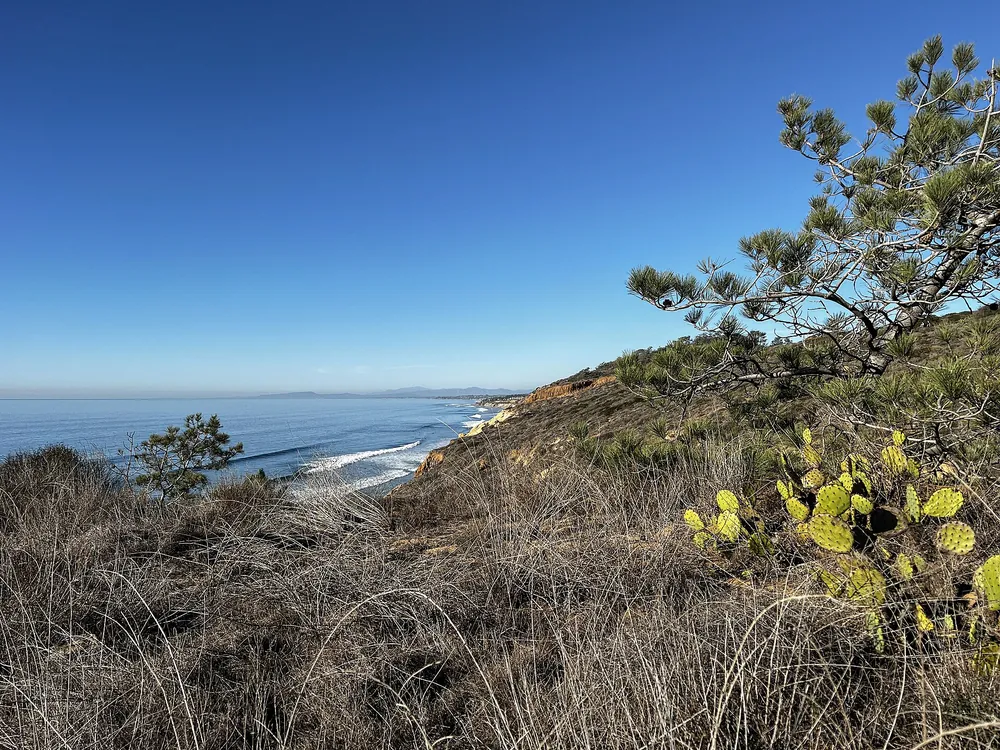
A quick walk to a lookout with views across the reserve and lagoon.
Popular Loop Ideas
- Easy: Guy Fleming Trail plus High Point.
- Moderate: Razor Point to the Beach Trail, then walk the beach and return via the road or trails.
- Longer: Broken Hill Trail to the Beach Trail and back up.
Parking for Your Torrey Pines Hike
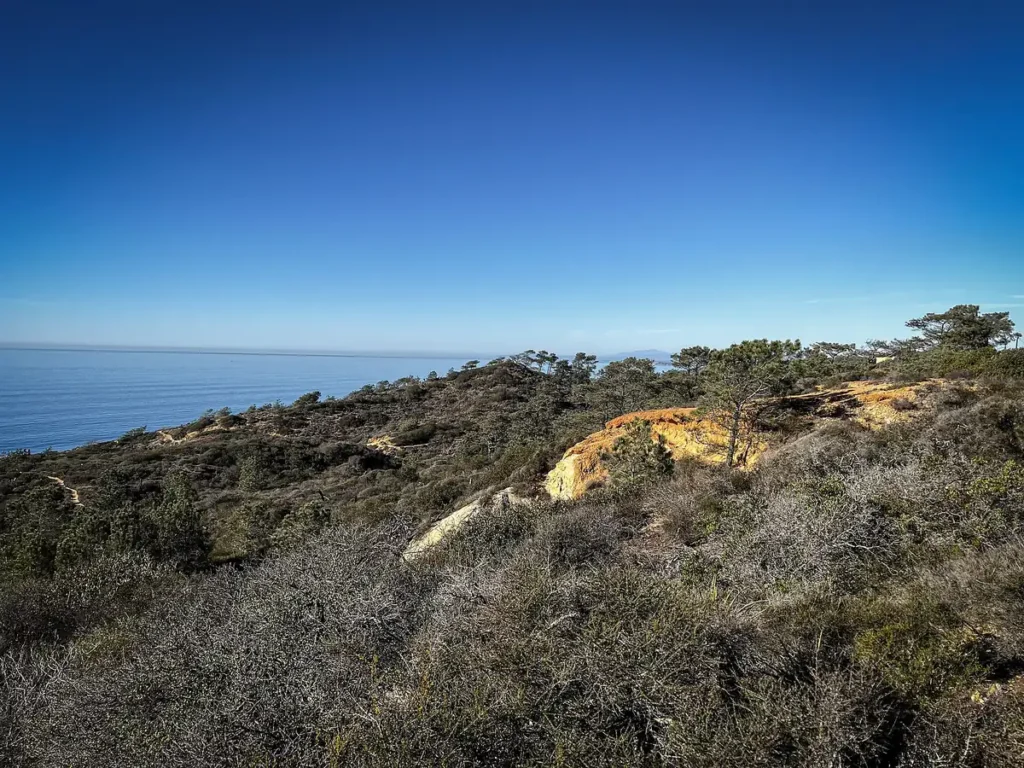
Beach Parking Lots
Paid lots near the beach at the bottom of the hill are the most convenient. Fees apply and can vary by season.
Upper Lot
A smaller lot near the visitor center and lodge fills quickly. When it’s full, rangers may close the road up the hill.
Street Parking
Free parking along North Torrey Pines Road is available but limited. It requires walking up the road, and you should obey all signs.
Tips
- Arrive early, especially on weekends.
- Have a plan B if lots are full.
- Consider visiting on a weekday.
Rules to Know
The reserve has strict rules to protect the habitat:
- No dogs in the reserve.
- No food on the trails or at the top; eating is allowed on the beach.
- Stay on trails. The sandstone is fragile.
- No drones without permission.
- Pack out trash.
- No smoking.
Check current rules before you visit.
Visitor Center and Lodge
The historic lodge near the top houses a visitor center with exhibits about the reserve’s plants, animals and geology. Docent-led walks are often offered on weekends.
Torrey Pines State Beach
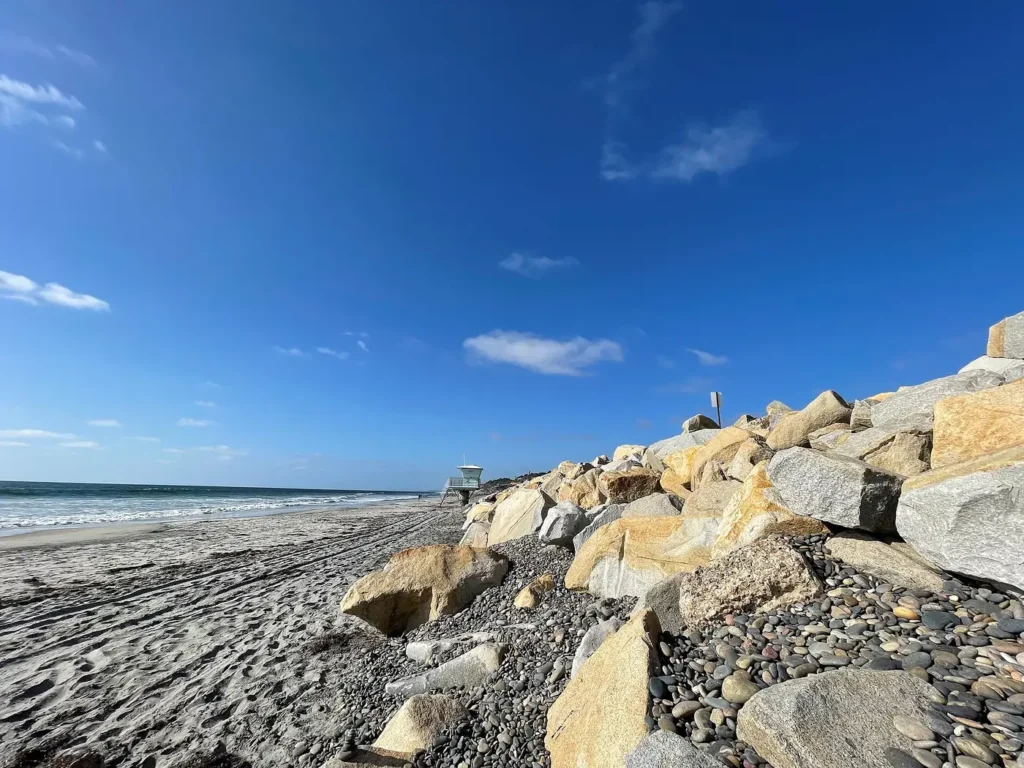
The beach below the reserve is long and sandy. At low tide you can walk along the base of the cliffs, but stay away from the cliff base, where rocks can fall. Check tide times before walking, as high tide can block passage.
Best Time for a Torrey Pines Hike
- Early morning: Cooler, quieter and easier parking.
- Spring: Wildflowers are at their best.
- Winter: Clear days offer great views; whale watching from the bluffs is possible.
- Sunset: Beautiful, but check closing times.
See our best time to visit San Diego guide for seasonal patterns.
Plants and Wildlife on Your Torrey Pines Hike
The Torrey Pine
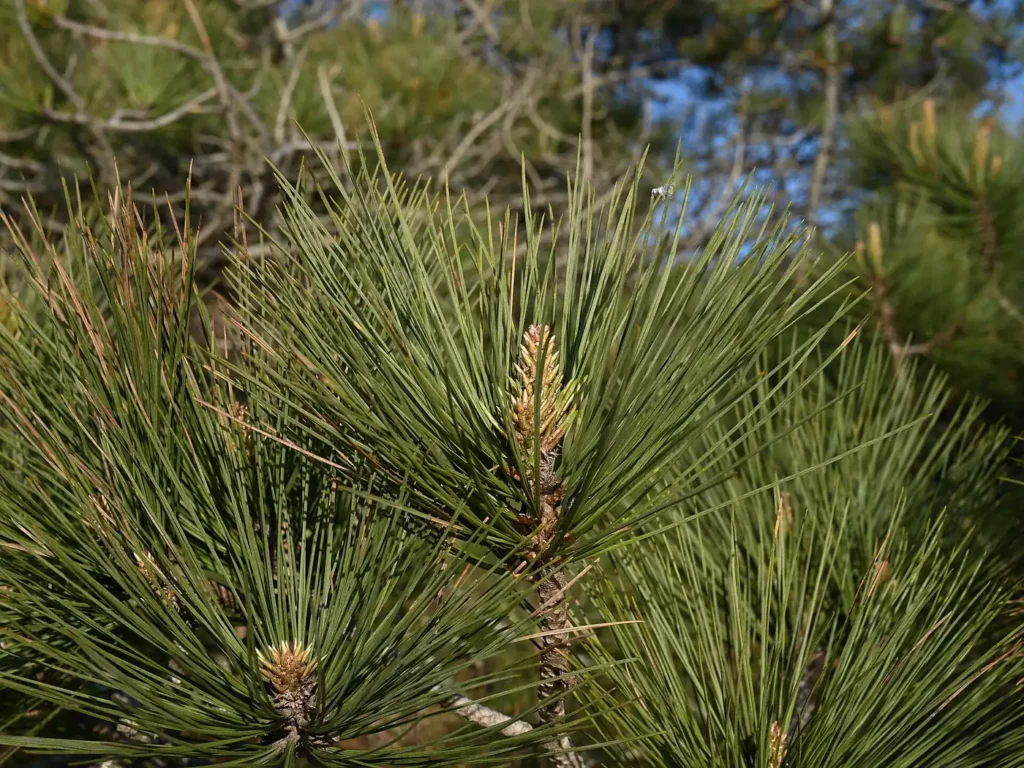
Torrey pines have long needles in bundles of five and often grow twisted and windswept along the bluffs. Many trees in the reserve have been affected by drought and bark beetles over the years, which is one reason staying on trail and protecting the habitat matters so much.
Coastal Sage Scrub and Chaparral
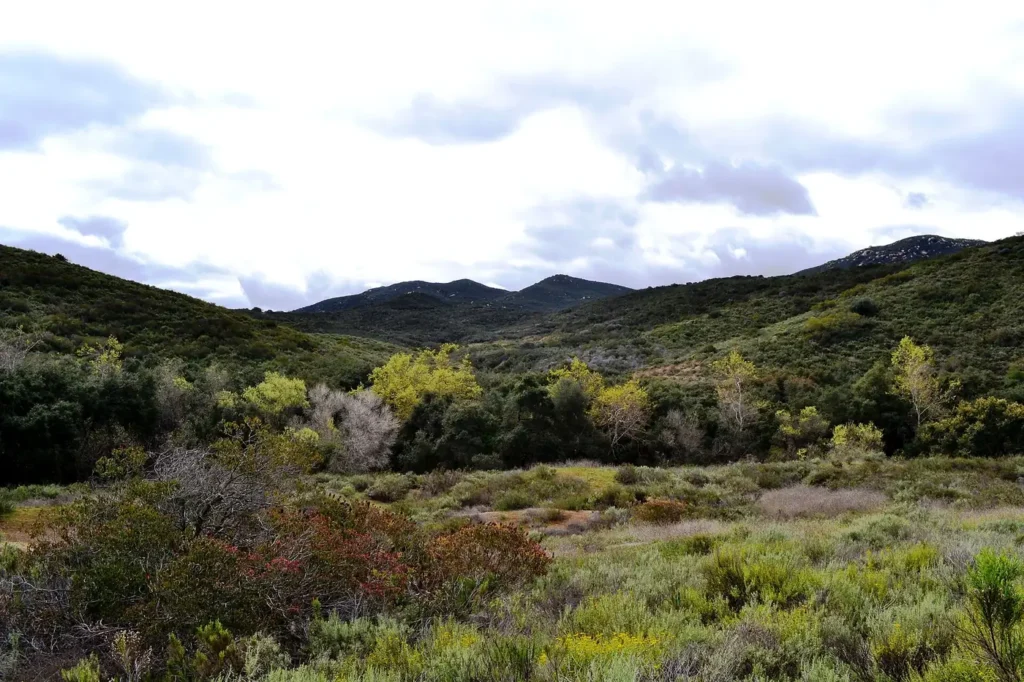
The reserve protects native plant communities that once covered much of coastal Southern California. In spring, look for wildflowers in yellow, purple and red. Interpretive signs along the trails explain what you’re seeing.
Wildlife
Lizards sun themselves on warm rocks, and birds such as hawks, ravens and hummingbirds are common. Rabbits and ground squirrels are often seen near trails. Rattlesnakes live in the reserve too, so watch where you step and keep to the trail. Offshore, you may spot dolphins, and in winter, gray whales migrating along the coast.
Los Peñasquitos Lagoon
The northern section of the reserve borders a lagoon that’s important habitat for birds. The extension area across the lagoon has additional trails that tend to be quieter.
Trail Etiquette at Torrey Pines
- Yield to others on narrow sections and stairs.
- Step aside for photos instead of blocking the trail.
- Keep voices low to respect wildlife and other hikers.
- Don’t climb on sandstone formations or carve into them.
- Stay behind fences near cliff edges, which can crumble without warning.
Combining Your Hike With the Beach
A popular plan is to hike down the Beach Trail, walk north along the sand toward the main beach lot, then return up the road or trails. Check tides first: at high tide, waves can reach the cliff base and block the way. Lifeguards are stationed seasonally at Torrey Pines State Beach.
What to Bring
- Water.
- Sun protection.
- Comfortable shoes with grip.
- A light jacket for coastal fog.
- A camera or binoculars.
Nearby Attractions
- La Jolla: See our La Jolla Cove guide.
- Del Mar: A charming beach town just north.
- Torrey Pines Gliderport: Watch paragliders above the cliffs.
- Black’s Beach: A remote beach south of the reserve.
Accessibility
Some areas near the lodge are relatively accessible, but most trails involve uneven surfaces, sand and stairs. Contact the park for current accessibility information.
Frequently Asked Questions
How long is the Torrey Pines hike?
Trails range from well under a mile to a few miles. Most visitors spend one to three hours.
Is the Torrey Pines hike hard?
Most trails are easy to moderate. The Beach Trail involves a climb back up.
Are dogs allowed at Torrey Pines?
No. Dogs are not allowed in the reserve.
Is there an entrance fee for Torrey Pines?
Hiking is free, but parking in the official lots requires a fee.
Can you bring food on the trails?
No. Food is only allowed on the beach.
When is the best time to hike Torrey Pines?
Go early in the morning or on a weekday if you can, and spring brings wildflowers.
Official resources: Torrey Pines State Natural Reserve (California State Parks) and NWS San Diego forecast office.
Photo credits
Featured image: Stch2022 / Wikimedia Commons, CC0; About Torrey Pines State Natural Reserve: Z3lvs / Wikimedia Commons, CC0; Torrey Pines Hike Trails: Z3lvs / Wikimedia Commons, CC0; Guy Fleming Trail: Rickbramhall / Wikimedia Commons, CC BY-SA 4.0; Beach Trail: Tequask / Wikimedia Commons, CC BY-SA 4.0; High Point: Z3lvs / Wikimedia Commons, CC0; Parking for Your Torrey Pines Hike: Z3lvs / Wikimedia Commons, CC0; The Torrey Pine: Krzysztof Ziarnek, Kenraiz / Wikimedia Commons, CC BY-SA 4.0; Coastal Sage Scrub and Chaparral: Pacific Southwest Region USFWS from Sacramento, US / Wikimedia Commons (public domain); Razor Point Trail: XeresNelro / Wikimedia Commons, CC BY-SA 4.0; Parry Grove Trail: Tequask / Wikimedia Commons, CC BY-SA 4.0; Torrey Pines State Beach: Ctmyers0 / Wikimedia Commons, CC BY-SA 4.0.