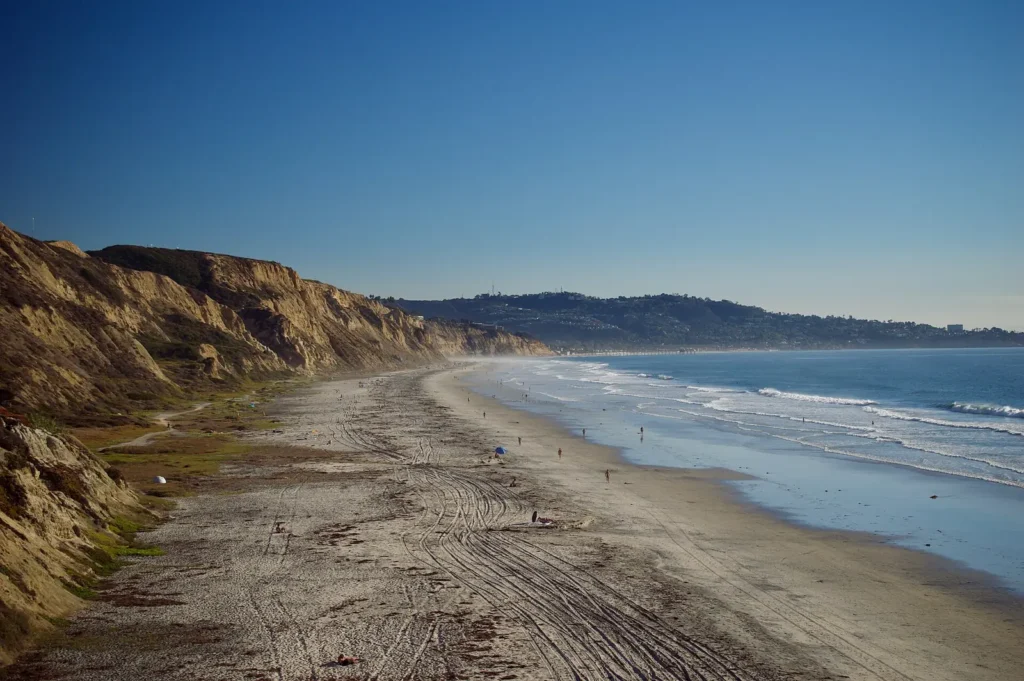
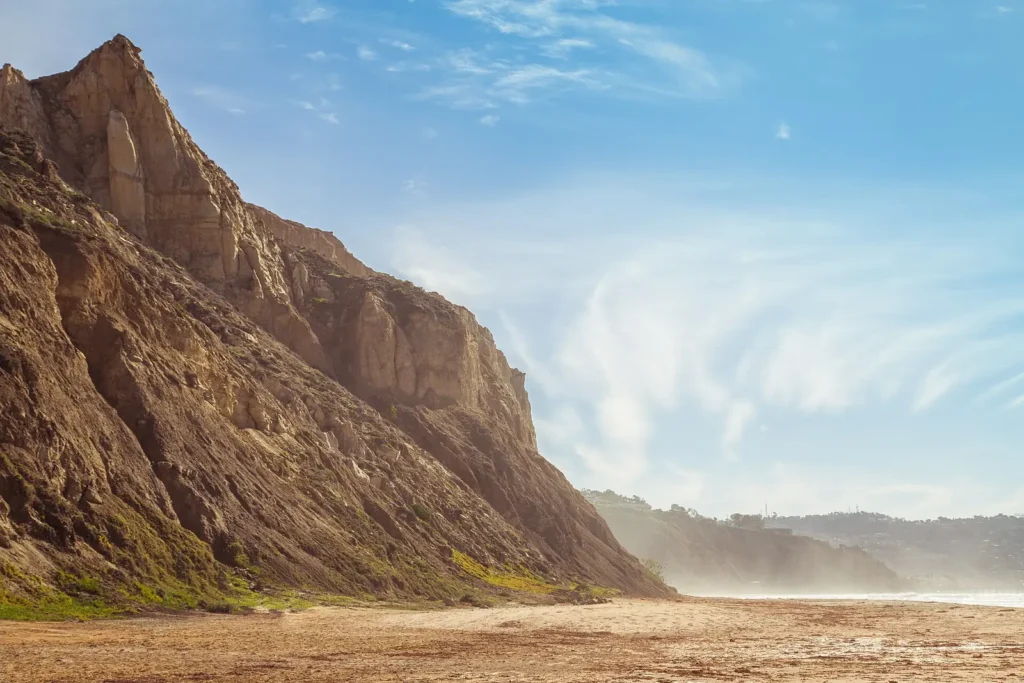
Black’s Beach (often searched as blacks beach) is the wildest stretch of sand in San Diego: about two miles of beach under 300-foot sandstone cliffs between La Jolla Shores and Torrey Pines. There are no roads down to the sand, no snack bars and no easy way in, and that’s a big part of the appeal. It’s known for powerful surf, dramatic scenery and a long clothing-optional tradition at the north end.
In this guide
Officially, the beach is made up of Torrey Pines City Beach and Torrey Pines State Beach, and the City of San Diego and California State Parks manage it together. Below we explain how to get down safely, where to park and which rules apply. For the bigger picture, see our San Diego beaches hub and our ranking of the best beaches in San Diego.
Black’s Beach at a glance
| Detail | What to know |
|---|---|
| Location | Below the bluffs between La Jolla Shores and Torrey Pines, west of UC San Diego |
| Length | About 2 miles |
| Best for | Experienced surfers, long beach walks, solitude, cliff scenery |
| Access | Steep trails or a long walk from neighboring beaches at low tide |
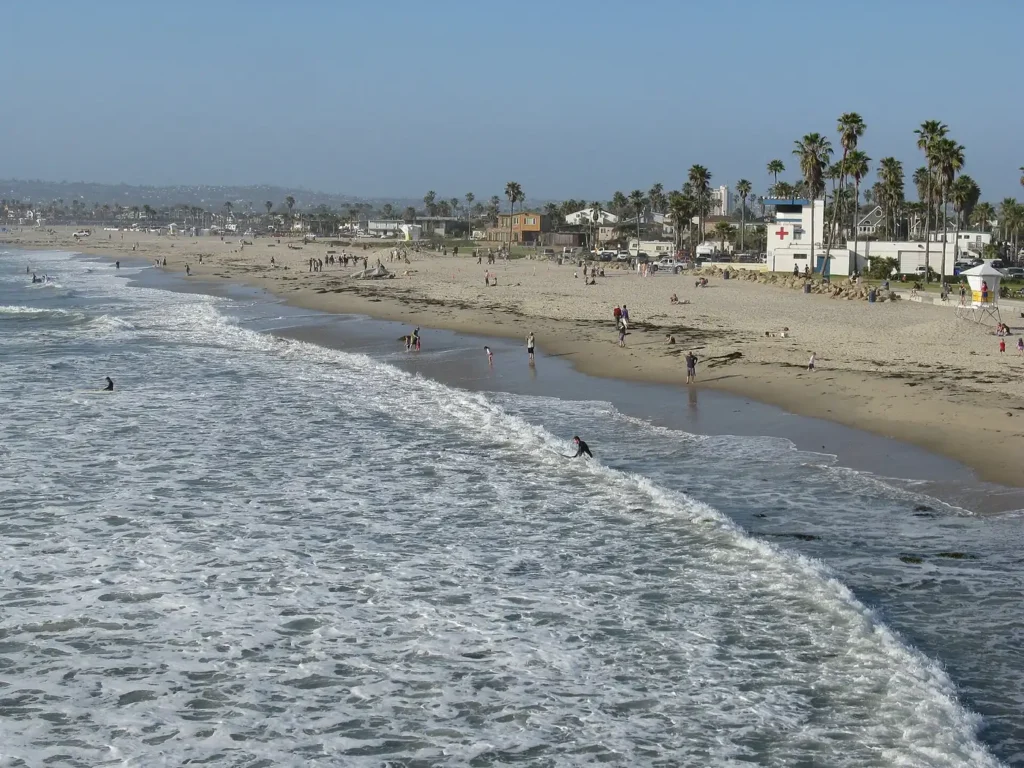
| Lifeguards | Permanent city lifeguard station |
| Dogs | Not a dog beach; see the rules section below |
| Official info | City of San Diego Black’s Beach page |
Directions and parking
There are three realistic ways to reach Black’s Beach. Pick the one that suits your fitness and the tide.

Option 1: Black Gold Road (recommended)
City lifeguards recommend the paved Black Gold Road as the safest route down. It starts off La Jolla Farms Road near UC San Diego. The road is private and steep, closed to cars, and managed by the university, but pedestrians can walk it. There is an emergency call box at the gate. Parking nearby is limited, with short time limits on residential streets, so read every sign. The walk back up is a real workout, so bring water.
Option 2: walk the beach at low tide
The safest access of all is often from adjacent beaches. At low tide you can walk north from La Jolla Shores past Scripps Pier, or south from Torrey Pines State Beach. Both routes take time, and the rocks near the cliffs can be cut off by a rising tide. Check NOAA tide predictions for La Jolla and turn back with plenty of margin. Our La Jolla Shores and Torrey Pines Beach guides cover parking at each end.
Option 3: the Gliderport trail
A dirt trail drops from near the Torrey Pines Gliderport down the cliffs. It is popular, but it is not a city-maintained trail. It is steep, loose and eroded, with drop-offs, and people are injured and rescued here regularly. Do not attempt it in flip-flops, after rain, in the dark or with small children. If in doubt, use Black Gold Road.
The Gliderport has a large dirt parking lot that is often the easiest place to park in the area. If you are combining a visit with a hike, our Torrey Pines hike guide covers the reserve trails just north.
What to do at Black’s Beach

- Walk and explore: with the sheer cliffs, ravines and empty sand, it’s one of the best beach walks in Southern California.
- Watch the surfers: On a good swell, Black’s has some of the most powerful waves in the county. It is a great show from the sand.
- Watch paragliders: Hang gliders and paragliders launch from the Gliderport above and ride the cliff updrafts.
- Look for wildlife: Pelicans, dolphins and, in winter and spring, migrating gray whales pass offshore. See our whale watching San Diego guide.
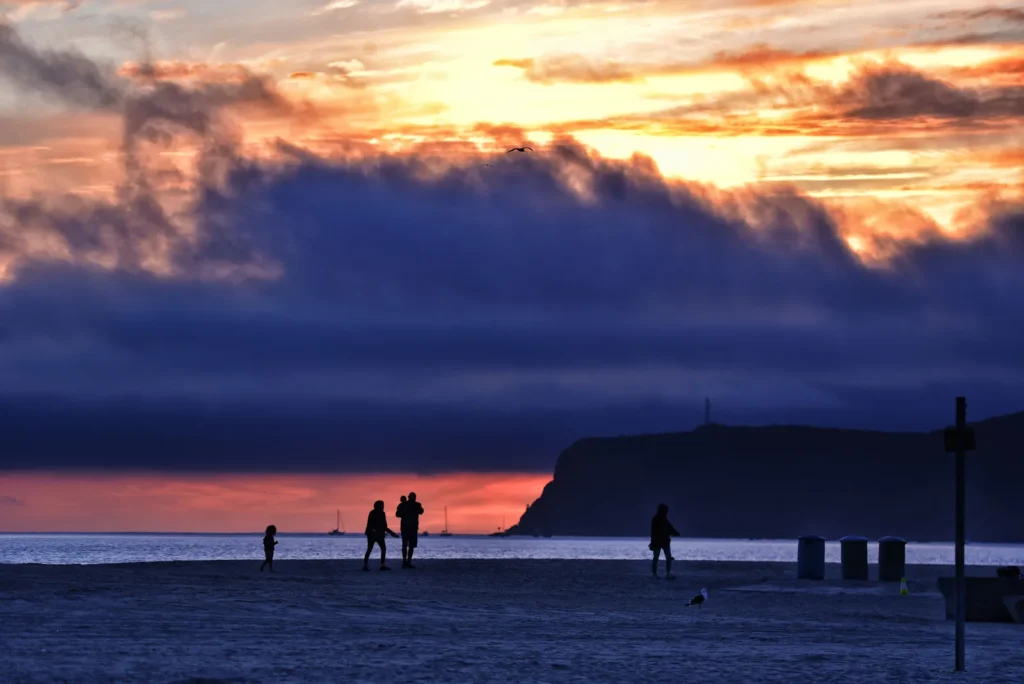
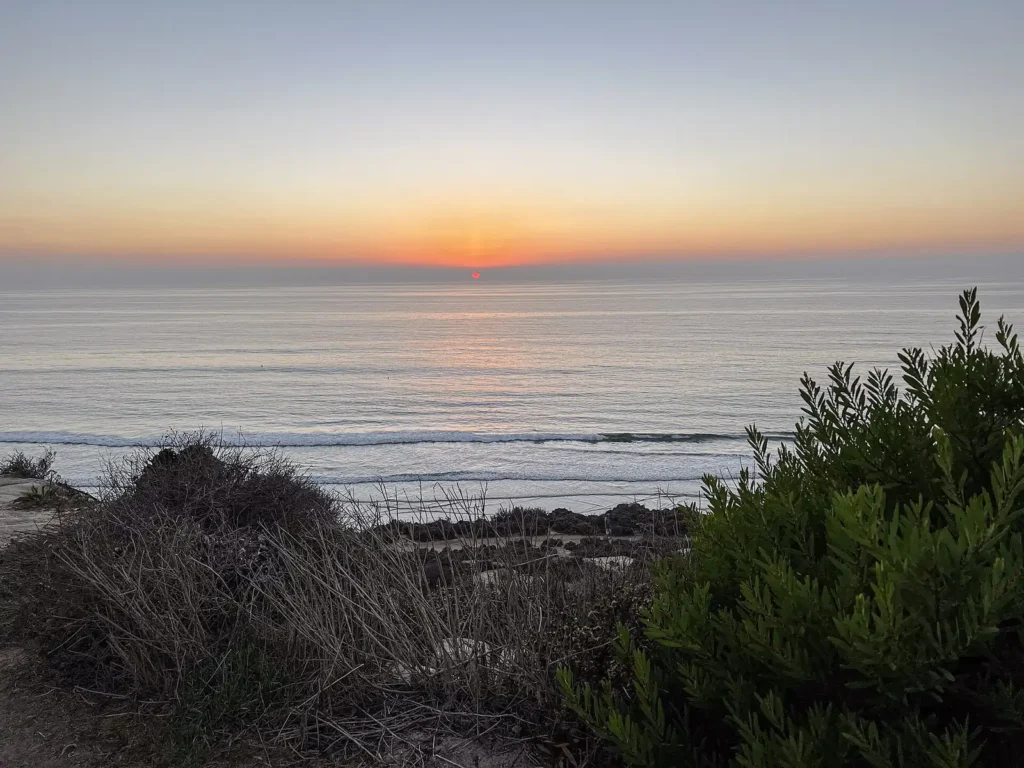
- Catch the sunset: Just remember you will be climbing back up in fading light.
Surfing and swimming
Black’s Beach sits next to the deep Scripps Submarine Canyon, which focuses swell energy onto the beach. The result is heavy, fast beach-break waves that are often bigger than anywhere else nearby. It is a destination for advanced surfers and bodyboarders, not beginners.

Swimming is risky on most days. Expect strong rip currents, heavy shore break and cold water. Swim only when the surf is small, near the staffed lifeguard tower, and ask lifeguards about conditions. Black’s is one of the beaches where the City of San Diego keeps a permanent lifeguard station, but the beach is long and help can be far away.
If you want to learn to surf, head instead to La Jolla Shores or Pacific Beach. Our best surf spots in San Diego guide matches breaks to skill levels.
There are few tide pools at Black’s. For tide pooling, visit the La Jolla tide pools a short drive south.
Facilities
Black’s Beach is undeveloped. There are no restrooms, showers, food stands or water fountains on the sand. Plan as if you are going on a short hike:

- Bring all the water and food you need.
- Pack out all trash.
- Use restrooms before you go, at La Jolla Shores, the Gliderport area or Torrey Pines State Beach.
- Bring sun protection; there is no shade beyond the cliffs.
Dogs and beach rules
Black’s Beach falls under two sets of rules. On the City of San Diego portion, standard city beach rules apply: no glass, no alcohol on city beaches and seasonal limits on dogs. The city’s beach and bay regulations explain that dogs are not allowed on city beaches from 9 a.m. to 6 p.m. from April through October and from 9 a.m. to 4 p.m. from November through March, and must be leashed at other times. On the California State Parks portion, dogs are not allowed at Torrey Pines State Beach. In practice, Black’s is not a place to bring your dog. For off-leash options, see our dog beach San Diego guide.

The clothing-optional question
Black’s Beach is widely known as a clothing-optional beach. The reality is more nuanced. The City of San Diego has banned nudity on its southern portion of the beach since 1977. On the state-managed northern portion, nudity has long been tolerated in practice, but it is not officially sanctioned, and rangers can take action, especially in response to complaints. Respect other beachgoers, do not take photos of people without consent and expect a mix of clothed and unclothed visitors.
Why is it called Black’s Beach?
The beach takes its name from the Black family, who owned land on the bluffs above in the mid-20th century. The paved road down to the sand, Black Gold Road, is part of that history too. Today the cliff tops are home to UC San Diego, the Salk Institute and the Torrey Pines Gliderport, while the beach itself has stayed remarkably wild. That contrast, research campuses on top and untouched sand below, is part of what makes a visit memorable.

What to bring along

- Sturdy shoes for the climb, plus sandals for the sand
- At least a liter of water per person
- Sunscreen, a hat and a light layer for the wind
- Snacks or a packed lunch
- A bag to pack out your trash
- A tide chart screenshot, since signal can be spotty below the cliffs
Timing your visit
- Low tide: Makes beach walks from La Jolla Shores or Torrey Pines possible and safer.
- Fall: Warm water, clear skies and solid swells.
- Winter: The biggest surf, which is thrilling to watch but dangerous to swim in.
- Weekday mornings: Quieter, with more parking near the trailheads.
Avoid the trails after heavy rain, when cliffs become unstable. For seasonal conditions, see San Diego weather by month.

Food nearby
There is no food at Black’s Beach, so plan your meal before or after. The Gliderport has a small cafe on the cliff top. La Jolla Shores, a short drive south, has casual cafes, taco spots and beachside restaurants along Avenida de la Playa. La Jolla Village has a wider range of restaurants with ocean views. Our San Diego restaurants with a view guide lists favorites.
Nearby things to do
- Torrey Pines State Natural Reserve: Rare Torrey pine trees and cliff-top trails, just north.
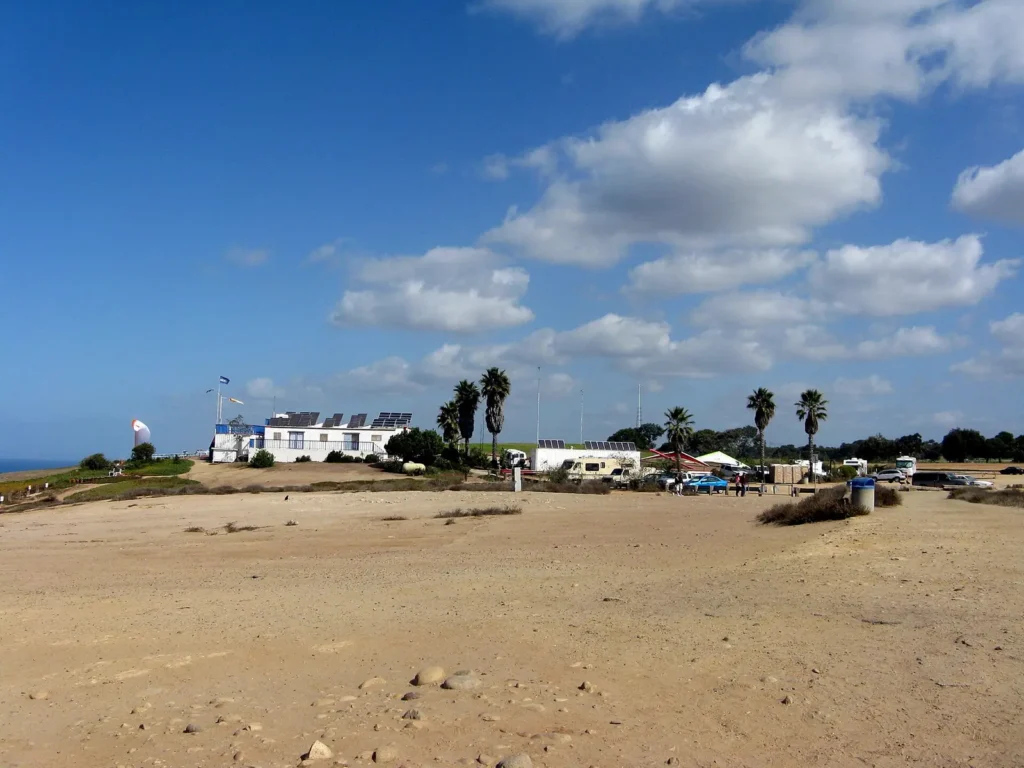
- Torrey Pines Gliderport: Watch launches or book a tandem flight.
- Salk Institute: Its famous courtyard faces the Pacific near the Gliderport.
- La Jolla Shores: Calm water, kayaking and snorkeling. See our kayaking San Diego guide.
- La Jolla Cove: Sea lions and clear water. Read our La Jolla Cove guide.
- Where to stay: Our La Jolla beach hotels guide lists options nearby.
Staying safe

- Use Black Gold Road or walk in from neighboring beaches when the tide allows.
- Stay off cliff edges and away from the base of the cliffs, which collapse without warning.
- Know the tide schedule and do not get trapped by a rising tide.
- Swim only near a staffed lifeguard tower, and only on calm days.
- Carry a charged phone, but do not rely on signal below the cliffs.
- Leave before dark so you are not climbing in fading light.
Frequently asked questions
How do you get to Black’s Beach?
The safest ways down are the paved Black Gold Road off La Jolla Farms Road, or a walk at low tide from La Jolla Shores or Torrey Pines State Beach. The dirt trail from the Gliderport is steep, and the city doesn’t maintain it.
Is Black’s Beach a nude beach?
Nudity is prohibited on the city-managed portion. On the state-managed northern portion, nudity has long been tolerated in practice, but it is not officially sanctioned.
Is Black’s Beach good for swimming?
Usually not for casual swimmers. The submarine canyon offshore creates powerful waves and rip currents. Swim only on calm days near the lifeguard tower.
Are there restrooms at Black’s Beach?
No. There are no restrooms, showers or food on the beach.
Can I bring my dog to Black’s Beach?
It is not a good choice. Dogs are banned on the Torrey Pines State Beach portion and restricted on city beaches during the day.
Is there a lifeguard at Black’s Beach?
Yes. The City of San Diego keeps a permanent lifeguard station at Black’s, but the beach is long and remote, so help can take time to reach you. Swim only when conditions are calm and you are confident in the water.
How long does it take to hike down to Black’s Beach?
Plan on roughly 15 to 30 minutes down, depending on the route and your fitness, and longer to climb back up. Start early, bring water and leave plenty of daylight for the return.
Can you surf Black’s Beach as a beginner?
No. The submarine canyon offshore focuses swell into powerful, fast waves that are best left to experienced surfers. Beginners should head to La Jolla Shores instead.
Photo credits
Featured image: Levi Clancy / Wikimedia Commons, CC BY-SA 4.0; Black’s Beach at a Glance: Tony Webster from Portland, Oregon, United States / Wikimedia Commons, CC BY 2.0; Getting There and Parking: Abeach4u / Wikimedia Commons, CC BY-SA 3.0; What to Do at Black’s Beach: Levi Clancy / Wikimedia Commons, CC BY-SA 4.0; Surfing and Swimming: Levi Clancy / Wikimedia Commons, CC BY-SA 4.0; Facilities: Levi Clancy / Wikimedia Commons, CC BY-SA 4.0; Dogs and Beach Rules: Levi Clancy / Wikimedia Commons, CC BY-SA 4.0; Why Is It Called Black’s Beach?: Tony Webster from Portland, Oregon / Wikimedia Commons, CC BY-SA 2.0; What to Bring: Abeach4u / Wikimedia Commons, CC BY-SA 4.0; Best Time to Visit: Levi Clancy / Wikimedia Commons, CC BY-SA 4.0; Nearby Things to Do: Abeach4u / Wikimedia Commons, CC BY-SA 4.0; Safety Tips: Levi Clancy / Wikimedia Commons, CC BY-SA 4.0.