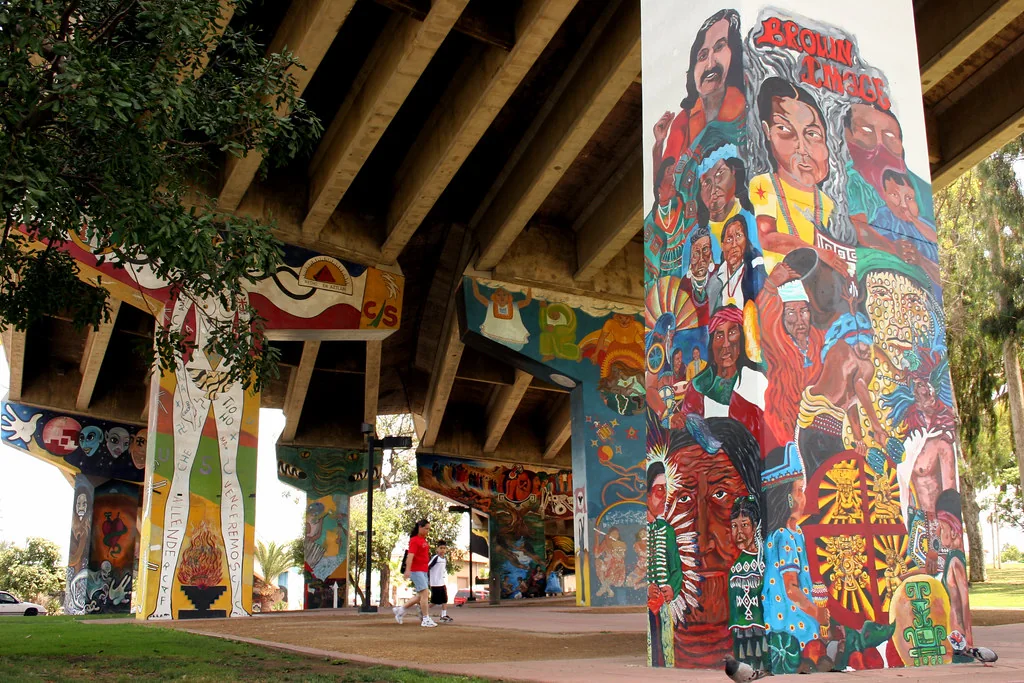
Photo: kellinahandbasket / Flickr
Barrio Logan San Diego is one of the city’s most culturally important neighborhoods. It’s a historic Mexican American community just south of downtown, known for the Chicano Park murals, a busy arts scene along Logan Avenue and some of the Mexican food San Diegans love most. The neighborhood has a long history of community activism, and these days it pulls in art lovers, food fans and history buffs. Below we cover Chicano Park, the neighborhood’s history, where to eat and shop, and how to visit respectfully.
In this guide
- Barrio Logan at a glance
- A brief history
- Chicano Park
- Chicano Park Museum
- Art and galleries
- Where to eat in Barrio Logan
- Breweries and coffee
- Shopping
- Lowrider culture
- Barrio Logan timeline
- Photo tips
- Timing your visit
- Getting to Barrio Logan
- A half-day Barrio Logan itinerary
- Tips for visiting
- Nearby
- Checklist before you go
- Questions people ask
Barrio Logan is part of our San Diego neighborhood guide. For more Mexican food, see best tacos in San Diego and best Mexican food in San Diego.
Barrio Logan at a glance
| Detail | What to know |
|---|---|
| Location | South of downtown and East Village, along San Diego Bay |
| Main street | Logan Avenue |
| Best for | Murals, Chicano history and art, Mexican food |
| Landmark | Chicano Park, beneath the Coronado Bridge approaches |
| Transit | Barrio Logan Trolley station (Blue Line) |
| Learn more | Chicano Park Museum |
A brief history
Barrio Logan grew in the early 20th century as Mexican families, many fleeing the Mexican Revolution, settled near the bay and the shipyards. Once home to a much larger community with homes stretching to the waterfront, the neighborhood was reshaped in the mid-20th century by industrial zoning, and later by Interstate 5 and the Coronado Bridge, which cut through the barrio and displaced many residents.

In 1970, when residents learned that land under the bridge, which had been promised for a park, was being prepared for a California Highway Patrol station, they took action. On April 22, 1970, community members occupied the site, forming a human chain around bulldozers. The protests led the city and state to designate the land as a park. Starting in 1973, artists began painting murals on the bridge’s concrete pillars, turning the space into an outdoor gallery celebrating Chicano identity, history and struggle. Chicano Park was listed on the National Register of Historic Places in 2013 and was designated a National Historic Landmark in 2016.
Chicano Park
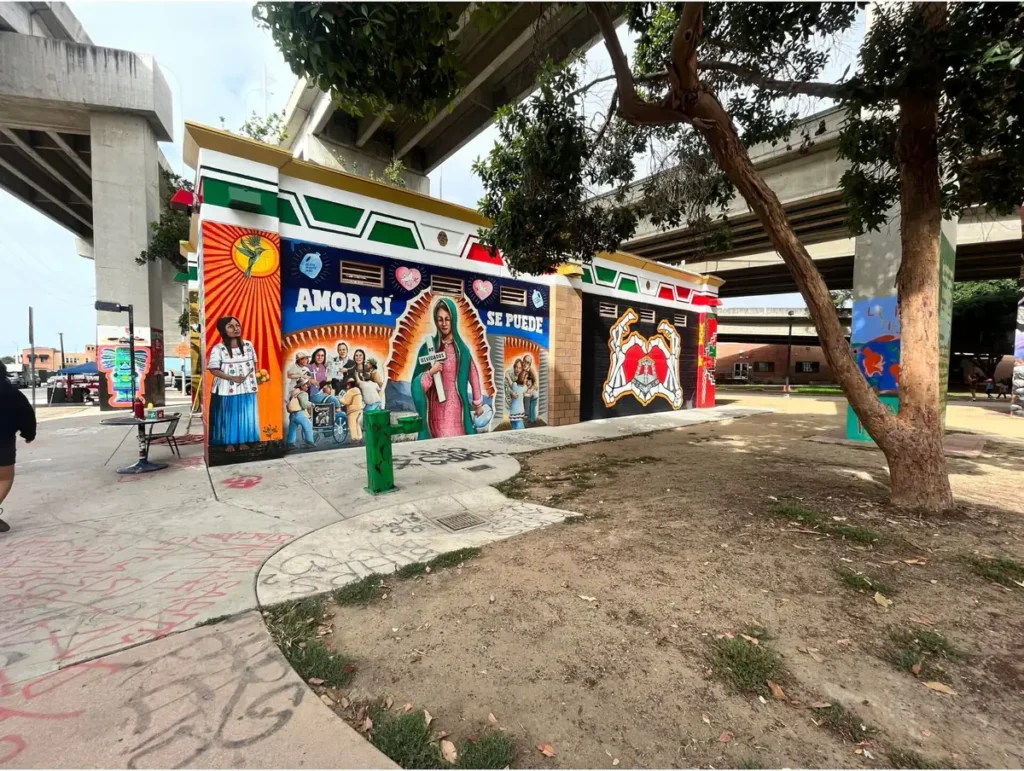
The murals
Chicano Park is often described as home to the largest collection of outdoor murals in the United States. Dozens of murals cover bridge pillars, abutments and walls, depicting Aztec and Mayan imagery, Mexican revolutionary leaders, farmworker activism, women of the movement and contemporary themes. Many have been restored over the years. Take your time, read the artist signatures and look for dates.
The Kiosko and Gardens
The park’s kiosko (a gazebo-like structure) and the landscaped areas around it are used for gatherings and performances.
Visiting Respectfully
- Chicano Park is a community space and a cultural landmark, so treat it as one and not only as a backdrop for photos.
- Don’t climb on murals or touch the paint.
- Be mindful of residents and gatherings.
- Support local businesses.
Chicano Park Day
Each year, around the April 22 anniversary of the 1970 takeover, the community celebrates Chicano Park Day with music, dance, lowriders and food. It’s a lively, family-friendly event. Check the Chicano Park Steering Committee for dates. See also our San Diego events hub.
Chicano Park Museum
The Chicano Park Museum and Cultural Center opened in 2022, with exhibits about the park’s history, Chicano art and the community’s activism. Start your visit here for context. Check the museum’s website for hours.
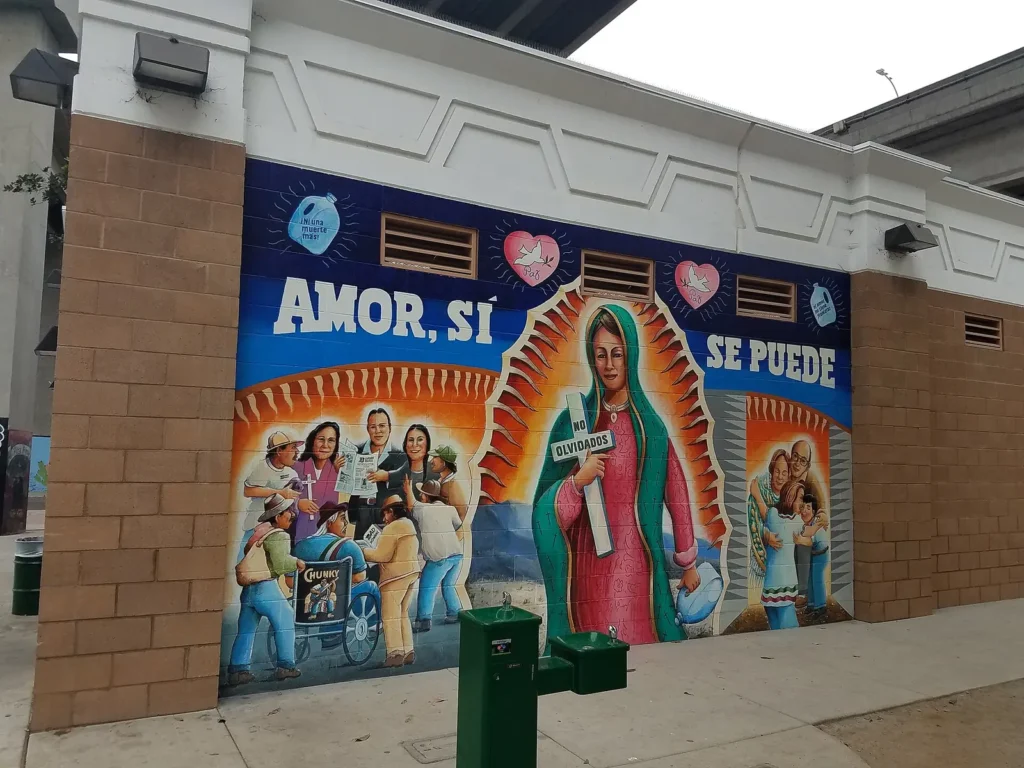
Art and galleries
Logan Avenue and nearby streets are home to galleries, studios and creative businesses, plus colorful murals on buildings beyond the park. Periodic art walks and events bring the street to life; check local listings.

Where to eat in Barrio Logan

Las Cuatro Milpas
A family-run institution since the 1930s, Las Cuatro Milpas is famous for homemade tortillas, rolled tacos and chorizo. Expect a line at lunch, bring cash, and arrive early because it closes in the afternoon.
Other local favorites
Barrio Logan has taquerías, Mexican bakeries, coffee shops, craft breweries and newer restaurants mixing traditional and modern flavors. Restaurants change, so check recent reviews and hours before you go.
Breweries and coffee
Several craft breweries and coffee roasters have opened in the neighborhood. See San Diego breweries.
Shopping
Look for local artisans, lowrider culture shops, Chicano art prints and clothing. Shopping local supports the community.
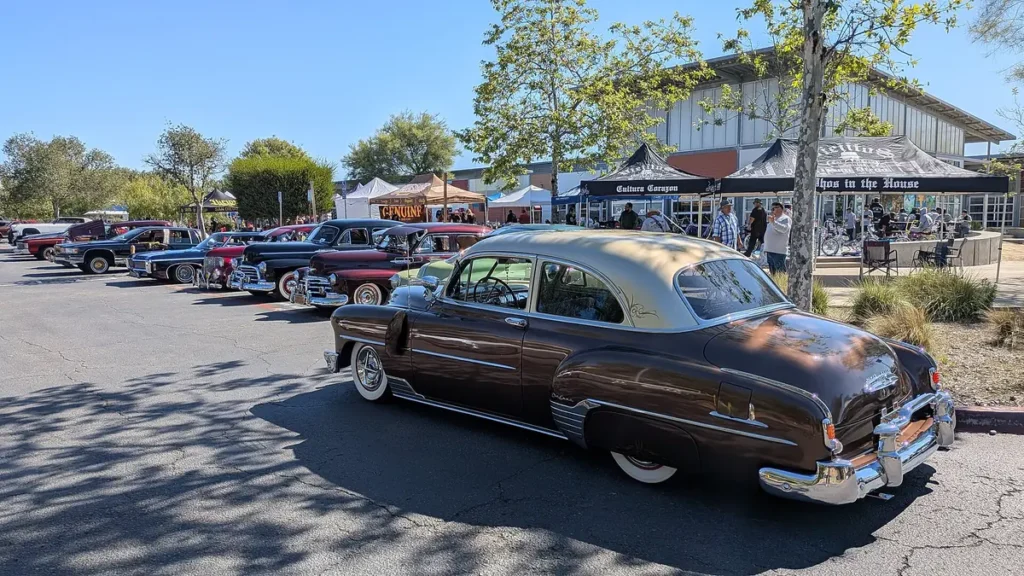
Lowrider culture
Barrio Logan is closely connected to San Diego’s lowrider culture. You may see lowriders cruising during events and gatherings, especially Chicano Park Day.
Barrio Logan timeline
| Year | Milestone |
|---|---|
| 1890s | First Mexican settlers arrive in the area then called Logan Heights |
| 1910s | Refugees from the Mexican Revolution settle in the neighborhood |
| 1940s | Naval installations block residents’ waterfront access |
| 1950s | Rezoning brings mixed residential and industrial use |
| 1963 | Interstate 5 divides the barrio |
| 1969 | Coronado Bridge on-ramps further divide the neighborhood |
| 1970 | April 22 community takeover creates Chicano Park |
| 1973 | Mural painting begins on the bridge pillars |
| 1980 | Park designated a city historic site |
| 2013 | Listed on the National Register of Historic Places |
| 2016 | Designated a National Historic Landmark |
| 2022 | Chicano Park Museum opens |
Dates are drawn from published histories of the park, including the Chicano Park Steering Committee.
Photo tips
Chicano Park is one of San Diego’s most photogenic places, but photograph thoughtfully:

- Shoot in the morning or late afternoon, when the light under the bridge is softer.
- Ask before photographing people, especially during gatherings, performances and Chicano Park Day.
- Credit the artists when sharing photos of murals online, if you can identify them.
- Avoid commercial shoots without permission; check with the community and the city.
Timing your visit
Barrio Logan is a year-round destination. Weekdays are quieter for wandering the murals, while weekends bring more activity at restaurants, breweries and galleries. Chicano Park Day in April is the liveliest time of year, but expect crowds and limited parking. San Diego’s mild weather makes any season comfortable; see best time to visit San Diego. If you are choosing dates, check San Diego weather by month for typical temperatures and rain.
Getting to Barrio Logan
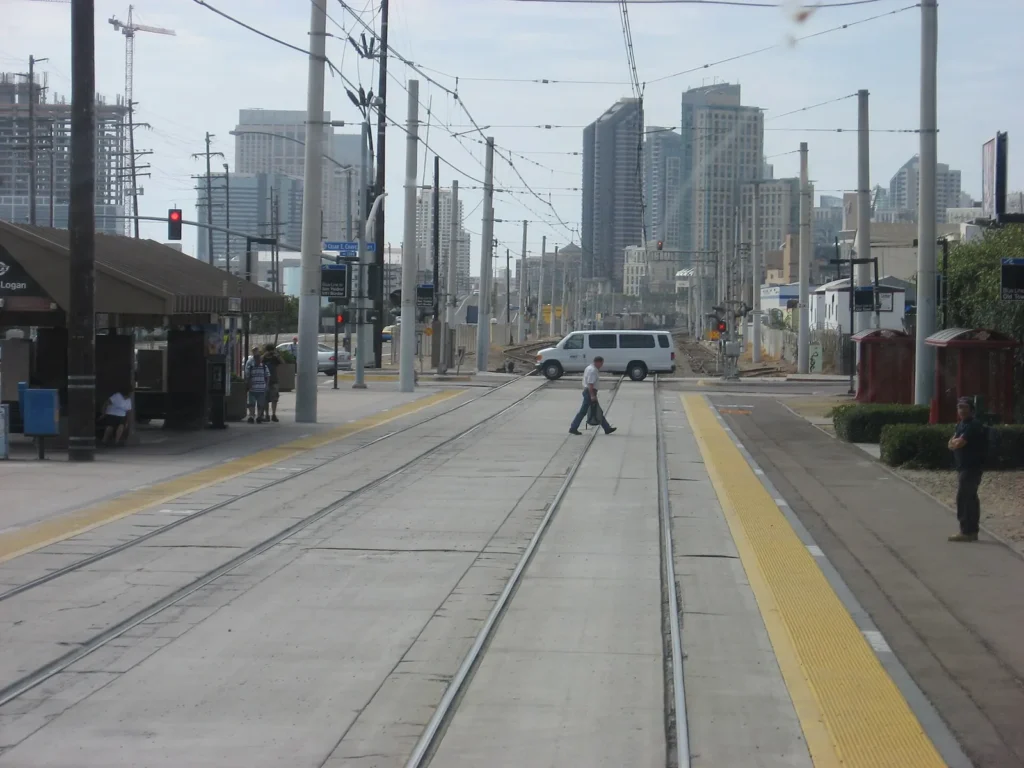
Trolley
The Barrio Logan Trolley station on the Blue Line is a short walk from Chicano Park. See San Diego Blue Line and the MTS trip planner.
Car
Barrio Logan is about 5-10 minutes from downtown. Street parking is available.
Rideshare and bike
Rideshare drop-offs along Logan Avenue are easy, and bike lanes and scooters connect the neighborhood to East Village. See getting around San Diego.
A half-day Barrio Logan itinerary
- 10 a.m.: Take the trolley to Barrio Logan station.
- 10:15 a.m.: Visit the Chicano Park Museum.
- 11 a.m.: Walk through Chicano Park’s murals.
- Noon: Lunch at Las Cuatro Milpas or another local spot.
- 1 p.m.: Browse Logan Avenue galleries and shops.
- 2:30 p.m.: Coffee or a craft beer.
Pair with nearby Gaslamp Quarter San Diego or East Village.
Tips for visiting
- Visit during the day for the best mural viewing.
- Bring cash for small businesses.
- Wear sunscreen; there’s limited shade in some areas.
- Respect private property and residents.
- Check event calendars before visiting.
Nearby
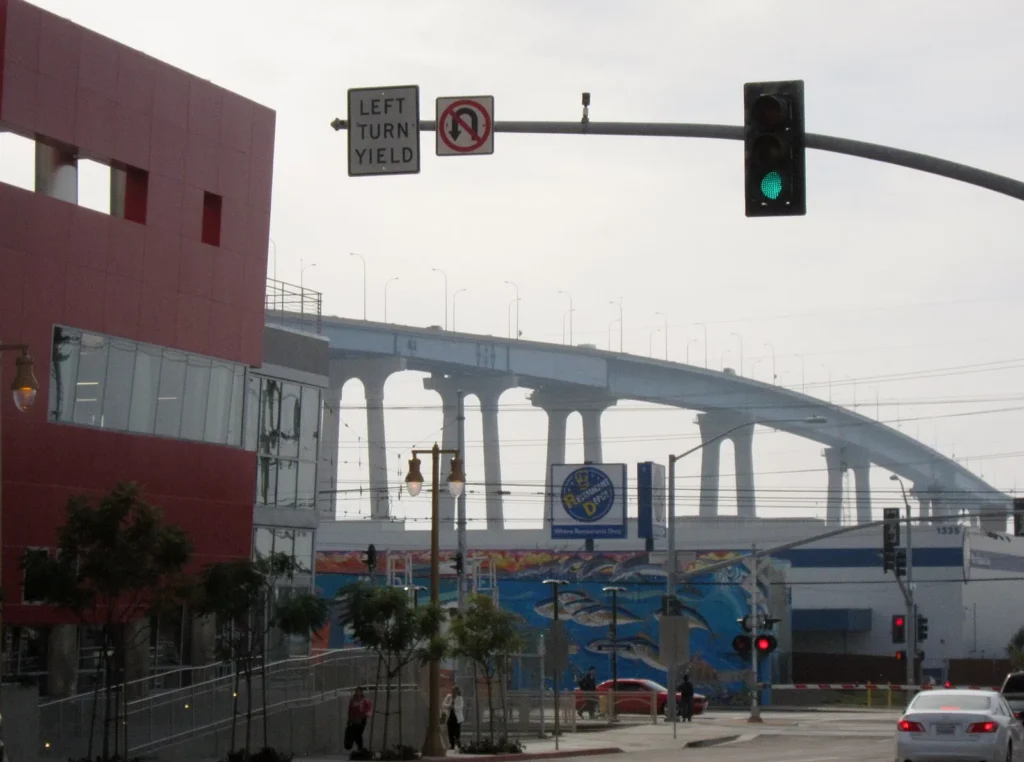
- Gaslamp Quarter and East Village: north of Barrio Logan.
- Petco Park: a short walk or trolley ride.
- Coronado: across the bridge above Chicano Park; see things to do in Coronado Island.
- Old Town: for more early San Diego history; see Old Town San Diego.
Checklist before you go
Use this short checklist to plan ahead and avoid common surprises:
- Visit the Chicano Park Museum first for context.
- Bring cash for small businesses.
- Check event calendars before visiting.
- Visit during the day for the best mural viewing.
- Respect residents and community spaces.
- Take the Blue Line trolley to avoid parking hassles.
Questions people ask
What is Barrio Logan San Diego known for?
Chicano Park’s murals, Mexican American heritage, art galleries and Mexican food.
Is Chicano Park free?
Yes, the park is a free public space.
When is Chicano Park Day?
Around April 22 each year. Check official sources for dates.
How do I get to Barrio Logan by trolley?
Take the Blue Line to Barrio Logan station.
Is Barrio Logan safe for visitors?
It’s a residential and arts neighborhood. Visit during the day and use normal city precautions. See is San Diego safe.
Is there parking in Barrio Logan?
Yes. Street parking is generally available, but it fills up during events like Chicano Park Day. On busy days, the trolley is the easiest option.
Can I bring kids to Chicano Park?
Yes. The park is a family-friendly public space with open lawns, and the murals are an easy way to introduce children to local history and art.
Who painted the Chicano Park murals?
Many artists, beginning in 1973, including members of local collectives and community artists.
What else is near Barrio Logan?
Barrio Logan is close to East Village, Petco Park, the Gaslamp Quarter and the San Diego Convention Center. It’s an easy add-on to a downtown day, and the Blue Line trolley connects it with downtown and the border.
Do I need a tour to visit Chicano Park?
No. The park is open to the public, and you can explore the murals on your own. For deeper context, visit the Chicano Park Museum or look for community-led tours and events, where you can learn about the artists and history behind the murals.
Photo credits
Featured image: kellinahandbasket / Flickr, CC BY 2.0; A Brief History: Paul Wasneski / Wikimedia Commons, Public domain; Chicano Park: Themoon&stars / Wikimedia Commons, CC BY-SA 4.0; Chicano Park Museum: RightCowLeftCoast / Wikimedia Commons, CC BY-SA 4.0; Art and Galleries: RightCowLeftCoast / Wikimedia Commons, CC BY-SA 4.0; Where to Eat in Barrio Logan: RightCowLeftCoast / Wikimedia Commons, CC BY-SA 4.0; Lowrider Culture: Ahsoka Dillard / Wikimedia Commons, CC0; Photography Tips: RightCowLeftCoast / Wikimedia Commons, CC BY-SA 4.0; Getting to Barrio Logan: Vrysxy / Wikimedia Commons, CC BY-SA 3.0; Nearby: Roman Eugeniusz / Wikimedia Commons, CC BY-SA 3.0.